AI agents “expose accountability gap” in Indian MSP contracts
Contracts built around human administrators are struggling to account for agent identities, permissions and actions, while MSPs may not have the visibility needed to reconstruct an AI-related breach.
Indian MSPs are entering a new accountability problem as AI agents move into customer environments with access to applications, data and infrastructure.
The technology is changing faster than the contracts and monitoring practices around it. Many managed-service agreements still define responsibilities around infrastructure, uptime, access and security controls, while AI agents can operate through service accounts, API keys and connected applications and take actions with limited human intervention.
That creates a difficult question when an AI agent or AI-connected workload contributes to a breach. The customer remains responsible for its obligations as the Data Fiduciary under the Digital Personal Data Protection framework, but the ‘MSP managing the environment may be the first party’ the customer turns to for answers about what happened, what the agent accessed and whether the incident was contained.
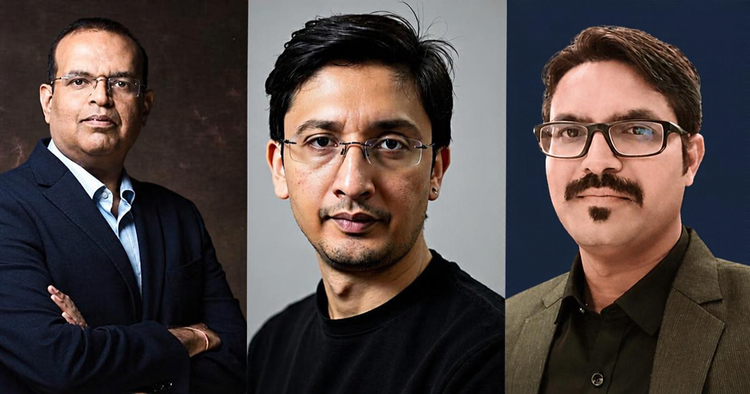
Speaking to CRN India, Ravindra Baviskar, director, sales engineering (India and SAARC) at Sophos; Sanjay Kukreja, CTO at eClerx; and Rohan Gupta, vice president – Cloud, Security and DevOps at R Systems, say MSPs need to rethink how they define agent ownership, access, monitoring, evidence preservation and incident response.
The issue is no longer simply whether an MSP can secure the infrastructure. It is whether it can establish what an AI agent was authorised to do, what it actually did and who was responsible for the controls around it.
MSP contracts were written for human administrators
Baviskar says the starting point for Indian MSPs is the contract itself.
“Most Indian MSP contracts were written for human administrators,” he says.
Traditional agreements typically cover uptime and response SLAs, cap liability at annual fees and say little about AI agents, automation service accounts or third-party models connected to customer systems, according to Baviskar.
He says contracts should identify an owner for every agent identity, define what each agent can access and require logging of agent actions. They should also establish a breach notification window that is shorter than the customer's own regulatory clock.
The commercial terms may need to change as well.
“Liability should reflect the data exposed, not the fees paid,” Baviskar says.
Without those provisions, he says an agent-related failure risks becoming a contractual dispute only after an incident has occurred.
“Without this, an agent's mistake becomes a dispute after the breach instead of a process during it,” he says.
Kukreja argues that accountability cannot simply be assigned to whichever party operates the technology. It needs to follow the degree of control and intent involved.
“When an AI agent contributes to a security incident, accountability should follow control and intent rather than simply sit with the technology provider or customer,” he says.
Traditional managed-service contracts already divide responsibilities around infrastructure, access, security controls and incident escalation. Agentic AI adds another layer because the system can make decisions and take actions across enterprise environments, according to Kukreja.
Contracts therefore need to establish who owns the agent, who authorises its actions, what data and systems it can access, where human oversight is required and who is responsible for monitoring and evidence preservation.
“The customer remains accountable for its business decisions and authorised use of AI, while the service provider should remain accountable for the controls and safeguards within the environment it operates,” he says.
MSPs can have logs without being able to explain what an agent did
The contractual question becomes an operational one when an incident occurs.
An MSP needs to reconstruct the chain of events quickly enough to establish which agent was involved, what identity and permissions it used, what applications or models it connected to, what data it accessed and what actions followed.
Kukreja says the critical requirement is to establish the difference between what an agent was authorised to do and what it did.
That requires visibility into agent identities, privileges, connected models and applications, data access, API calls, authentication events, relevant instructions, transaction logs and human intervention points.
The challenge is that conventional infrastructure monitoring may not provide that level of context.
“A conventional infrastructure log may show that an event occurred, but it may not explain why an AI agent initiated an action or what downstream systems it influenced,” Kukreja says.
Gupta says MSPs “need to treat agents much like privileged users” and establish controls around the identities through which they operate.
That includes knowing who approves an agent's API keys and OAuth scopes, who monitors its MCP and tool calls, who owns the kill switch and who is responsible when an agent misuses access managed by the MSP.
The gap becomes particularly visible when an MSP has conventional security telemetry but lacks agent-level attribution.
“Most MSPs can pull firewall, SIEM and login logs. Very few can trace what an agent actually did,” Gupta says.
For him, the issue is not simply whether MSPs are taking AI security seriously. It is whether their existing observability systems can follow an agent across the systems it can influence.
“The gap is visibility, not intent,” Gupta says.
Shared identities make attribution harder
Agent inventory and identity management therefore become important to incident response.
Baviskar says agents are often created by engineers or customers without being registered. They may run on shared service accounts, while their activity is not logged or retained centrally.
Gupta makes a similar point, saying agents can share service accounts and their actions may never reach the SIEM in a way that allows the MSP to trace what happened.
That creates an attribution problem for an MSP managing a customer environment. A conventional log may show that a service account accessed an application or system, but that does not necessarily establish whether the action came from an AI agent, an administrator or another automated process using the same identity.
For an MSP, knowing that an event occurred is therefore different from being able to reconstruct the agent's chain of action.
The inventory needs to extend beyond the agent itself. Gupta says an MSP “should be able to identify” every agent and model endpoint, the service accounts and tokens used by each, prompt and tool-call logs, the data touched and a clear incident timeline.
Kukreja similarly calls for visibility into connected models and applications, API calls, authentication events, relevant instructions and human intervention points.
That level of traceability changes agent governance from an AI policy exercise into an operational requirement for managed services.
Regulatory timelines make evidence availability critical
The regulatory environment adds urgency to that operational requirement.
CERT-In's directions require covered entities to report specified cyber incidents within six hours of noticing them or being informed about them. CERT-In also states that if all information required in the incident reporting form is not available within that period, the entity can provide the information available at the time and submit additional information later within a reasonable time.
The DPDP Rules, meanwhile, require a Data Fiduciary that becomes aware of a personal data breach to intimate the Data Protection Board without delay. The Rules require updated and detailed information within 72 hours of becoming aware of the breach, unless the Board allows a longer period.
That does not mean the MSP automatically becomes the Data Fiduciary or assumes every statutory reporting obligation. But where the MSP operates or manages the affected environment, its ability to provide the underlying technical evidence can directly affect the customer's ability to understand, contain and respond to the incident.
That puts a [premium on evidence] that goes beyond traditional infrastructure logs.
An MSP needs to know which agent was involved, which credentials and permissions it used, what model or endpoint it connected to, which tools and APIs it called, what data it touched and how the sequence unfolded.
Baviskar says most MSPs cannot yet provide that complete picture.
Agents can be created without being registered, operate through shared service accounts and generate activity that is not centrally logged or retained. The result is a gap between the evidence an MSP can traditionally produce and the evidence required to understand an autonomous system's actions.
Accountability moving from infrastructure to agent behaviour
The shift does not mean an MSP should automatically absorb responsibility for every action taken by an AI agent in a customer environment.
Instead, the three executives point to a more explicit division of responsibility.
Customers need to establish what AI systems are authorised to do and remain accountable for their business decisions and authorised use.
MSPs need to define and operate the controls around the environments they manage. Contracts need to make those boundaries explicit, while monitoring systems need to provide evidence when those boundaries are crossed.
For MSPs, that means treating an AI agent as more than another application running inside a managed environment.
Its identity, permissions, connected systems, actions and ability to affect downstream workloads need to be attributable. There also needs to be a clear mechanism for human intervention and, where necessary, stopping the agent.
Kukreja says AI governance needs to be built into the operating model from the outset, with continuous monitoring, traceability and clear human accountability.
For Indian MSPs, that changes the question they need to answer for customers. It is no longer enough to show that the firewall, SIEM and infrastructure are being monitored.
When an AI agent causes or contributes to a breach, the MSP needs to show which agent acted, what it was allowed to access, what it actually did and how the organisation responded.
That is the accountability test emerging as AI agents become part of the environments MSPs are already responsible for managing.