“India is at the top of the list” says AHEAD executives on next APAC Foundry
Customer spending and OEM demand are driving AHEAD’s regional Foundry strategy as enterprises look to procure, transform, and deploy AI infrastructure closer to where they'll use it.
AHEAD is looking at India as the leading candidate for its next Foundry facility in APAC as enterprise customers and OEMs seek to build and deploy AI infrastructure closer to their end markets.
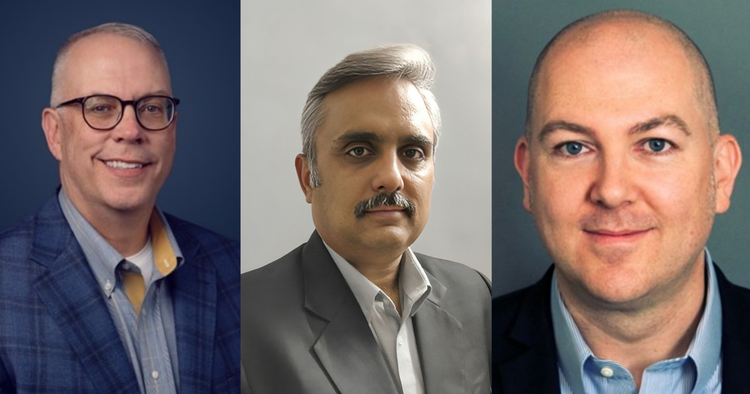
Speaking to CRN India, Chris Tucker, EVP, Foundry, AHEAD, Keith Odom, EVP, Services & Consulting, AHEAD, and Sumed Marwaha, managing director, AHEAD India, outlined how the company's Foundry strategy is expanding alongside its India delivery operation and the changing requirements around AI infrastructure.
AHEAD currently operates Foundry facilities in the US and UK, with the Netherlands next in line to serve the European Union and the broader EMEA region.
Tucker said APAC is the “remaining major region” under consideration, with India currently at the top of the list based on where AHEAD sees the strongest customer spend.
“Where is the predominant spend that we see from our customers in APAC? It's in India, so that would be the top of the list,” Tucker said.
He said AHEAD's decision on future Foundry locations is driven primarily by customer and OEM demand. The company is seeing existing customers that it serves in the US looking to deploy technology in other regions, while OEM partners are also seeking local capabilities to support deployments closer to customers.
The shift is changing how enterprises approach the procurement and deployment of infrastructure, according to Tucker.
He said US customers were previously more comfortable buying technology in the US and deploying it into other regions. That approach is changing as organisations want to procure, transform and deploy technology in the markets where it will ultimately be used.
“Where they're going directionally is that they now want to procure, transform, and deploy in those regions rather than move product around the world,” Tucker said.
That shift is also creating demand from AHEAD's OEM partners. Tucker said OEMs are looking for partners that can take on more of the work before infrastructure reaches the customer environment.
“The closest to that signal is probably our OEM partners that are in this region, who are saying that they have deployment needs, where they're now looking for partners like ourselves to help them shift their work left,” he said.
He explained that OEMs have traditionally deployed technology to a data centre or colocation facility where the product is built, but are now looking for more work to happen before the infrastructure reaches the customer.
For AHEAD, that is where the Foundry model becomes important.
India already serves as a global delivery base
The potential Foundry expansion would build on an India operation that AHEAD has been expanding rapidly over the past three years.
Odom said AHEAD has already outgrown its existing space and expects to move into larger facilities.
Marwaha said the company has also run out of capacity in both Gurgaon and Hyderabad and expects to add more space at those locations over the next year.
The growth is being driven by new business rather than the relocation of existing jobs, according to Odom.
“We're 900 folks in three years,” he said. “This is new deals driving this. We're not moving jobs anywhere. We're not moving people from the UK to here or US jobs here. This is net new business driving all of our growth.”
Marwaha said AHEAD is growing at almost 30 percent year on year, with its India delivery centres supporting global customers rather than serving an India-specific customer base.
“We are hiring at both locations, and we are growing our business, and that's what is leading to all this manpower,” he said.
Odom said India currently delivers 25 percent of AHEAD's total services, with that contribution expected to reach between 30 to 35 percent next year.
“We do managed services and professional services from here, and we also do a lot of internal work for our company from here as well,” he said. “But from our outgoing, client-facing services today, it's 25 percent, moving to 30 to 35 percent next year.”
That existing global delivery footprint provides a base for the potential expansion of the Foundry model into India.
Odom said AHEAD could open a Foundry facility in India in the second half of 2027 to handle rack integrations and related work that the company currently performs in the Netherlands, UK and US.
Foundry moves AI infrastructure from raw technology to deployable capacity
The case for Foundry is also being shaped by the growing complexity of enterprise AI deployments.
Odom said many customers are moving too quickly from experimentation to proofs of value without first establishing the use case, expected return on investment, data readiness, governance, security and data sovereignty requirements.
Customers are subsequently forced to step back and address those foundational issues before determining how infrastructure should be deployed.
AHEAD is seeing customers look for fewer partners that can support this process across the entire journey rather than managing multiple providers for individual parts of the project.
“They want bigger partners that can help them on this journey, kind of end to end,” Odom said.
He said that can include helping customers put their data in order, establishing governance models, developing organisational change management plans, evaluating cloud versus on-premises deployment, assessing security requirements and building the business case.
Once those decisions are made, Tucker said the focus shifts towards turning raw infrastructure into something that can be consumed quickly.
“Once you've defined what that use case is and you have an ROI for what that wants to look like, now it becomes incredibly important to take raw technology and turn it into something they can use for capacity,” he said.
That is where AHEAD sees Foundry playing a role by industrialising infrastructure deployment and making complex technology easier for customers to consume.
Tucker said the model allows AHEAD to move from bespoke infrastructure towards systems that can be integrated, tested and prepared for deployment more quickly.
“That's where the Foundry piece comes into play is just helping to then move bespoke technology into something much easier to consume and to turn into investment,” he said.
Higher rack densities add pressure on power, cooling and networking
The need for this type of infrastructure integration is also being influenced by the increasing power and cooling requirements of AI systems.
Tucker said rack densities that historically sat around 10 to 15 kilowatts are expected to rise to 250 kilowatts, while India's roadmap could see racks reaching up to 1MW in the foreseeable future.
“Power consumption is one piece. Cooling is the second piece,” he said.
As infrastructure moves beyond traditional air cooling, data centre operators will need to prepare for liquid cooling and ensure that facilities can support the combination of information technology and operational technology required by higher-density deployments.
Tucker said the infrastructure requirements extend beyond power and cooling to the facility itself and the networking layer connecting the systems.
A typical rack deployment could previously be handled largely through an IT team, but higher-density AI infrastructure requires greater involvement from facility management and operational technology teams, he said.
“Without a robust network structure, it doesn't really matter,” Tucker said. “You still need to be able to move that data incredibly quickly around the racks that you build in.”
For AHEAD, those changes are strengthening the case for a regional Foundry model that can prepare infrastructure closer to where it will be deployed.
While the company has not committed to opening a Foundry in India, Tucker said the country currently sits at the top of AHEAD's list as it evaluates its APAC expansion, driven by the concentration of customer spend and the deployment requirements emerging from OEM partners in the region.