‘Margins will not change,’ said Logitech’s Manoj Sahay on India manufacturing
Local production in Manesar is expected to shorten transit times, while Logitech looks to build supplier capabilities and assess further products based on demand in India.
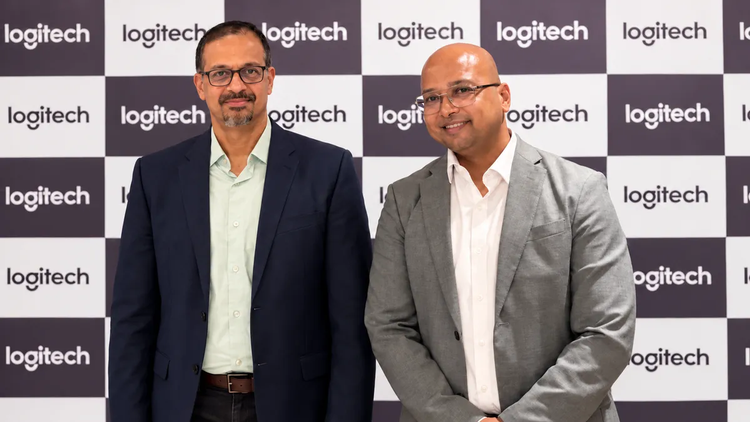
Logitech’s local manufacturing initiative in Manesar, Haryana, will shorten some supply lead times for the Indian market but will not change reseller margins or distributors’ inventory practices, Manoj Sahay, country head for India at Logitech, told CRN India.
The company has started local production of selected products in the webcam and pointing-device categories.
While the move brings manufacturing closer to the Indian market, Logitech does not expect distributors to change how they stock products or resellers to see a change in margins.
“Being closer to the market always shortens the amount of transit time. But our distributors, who distribute to the reseller market, typically carry enough stock to ensure that there is never a stockout and that they have adequate inventory to cater to the market. This will not change,” Sahay said.
He adds that inventory planning is also linked to distributors’ working capital and investments. Although shorter lead times will require Logitech to plan for storage and logistics, the company does not expect a significant change from the reseller’s perspective.
“Margins will not change either,” Sahay said.
He sees a potential consumer-facing benefit in the Made in India tag, particularly as Logitech has chosen a higher-volume product category for its initial manufacturing operations.
To develop India's manufacturing ecosystem
Beyond the immediate supply chain benefits, Logitech wants to build manufacturing capabilities in India and develop a wider supplier ecosystem that can support its operations.
Sree Chenincherry, chief supply chain operations officer at Logitech, said the company has seen improvements in the capabilities of Indian manufacturers. During his visits, he has observed greater sophistication in the products suppliers build and increasing complexity in their operations.
“That gives me a lot of confidence in building this capability now,” Chenincherry said.
He said Logitech is not simply looking for an established supplier ecosystem but is also willing to invest in developing the capabilities of its manufacturing partners.
When production begins, Logitech takes a group of employees from the manufacturing partner to its own manufacturing facilities for intensive knowledge transfer over several weeks.
The objective is to ensure that the [partner’s employees are sufficiently trained] to carry out the manufacturing work.
Logitech continues to monitor operations, but Chenincherry said the company does not want manufacturing partners to remain completely dependent on its own teams. It wants them to develop the capabilities required to manage the process.
He also sees the development of the semiconductor ecosystem and other manufacturing capabilities in India as a potential boost for the country's supplier base.
Product expansion will depend on market demand
Logitech does not have a fixed timeline for expanding local production to other categories, including keyboards, headsets or conferencing and collaboration products.
Chenincherry said the company will initially focus on higher-volume products to build manufacturing capabilities and achieve economies of scale. It will then assess additional products based on their existing or potential volumes in the Indian market.
“We do not have a specific timeline. It is more about enabling workspace solutions. From a manufacturing standpoint, we start with higher-volume products, where we can build capabilities, achieve economies of scale and establish the manufacturing process. We then continue to look at the next product,” he said.
The company’s manufacturing plans also reflect its longer-term view of the Indian market. Sahay points to the growing number of knowledge workers, increasing individual PC ownership and the expansion of broadband connectivity as factors supporting demand for workspace products.
He also highlights India's growing GCC ecosystem. Sahay said the country has around 1,800 GCCs, with almost 2,400 being set up. These centres are influencing strategy at their global parent companies, rather than limiting their work to back-end operations.
Logitech sees opportunities across enterprise and consumer-facing channels. The company has separate go-to-market teams for enterprise and B2C reseller businesses, and Sahay said both segments offer significant growth potential.
The enterprise opportunity, he said, extends beyond video conferencing to total workspace solutions. Employees who use video and audio equipment in office meeting rooms also want a similar experience when working from home.
For resellers, Logitech focuses on the product range suited to consumers and smaller businesses.
Sahay said the opportunity exists across customer segments, supported by the growing need for workspace solutions.
The immediate impact of local manufacturing for the channel is therefore expected to be shorter transit times rather than a change in margins or inventory practices.
Logitech's longer-term plans will depend on its ability to develop local manufacturing capabilities and identify products with sufficient demand to support further production in India.