Wipro Q2 Earnings: ‘We will continue to make these investments, even when they create near-term margin headwinds,’ CEO Says
Srini Pallia says Wipro’s strategic investments are expanding its addressable markets as the company scales its AI-native unit and targets opportunities across the AI value chain.
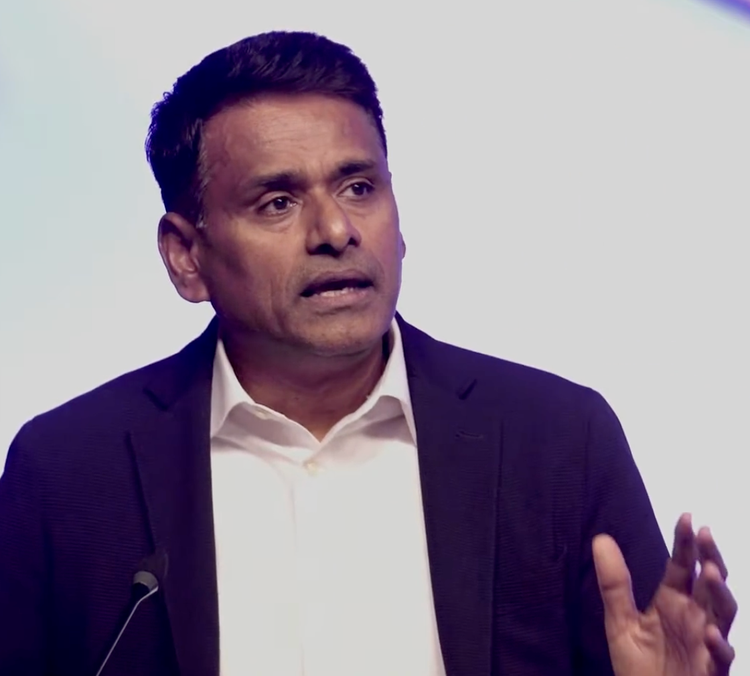
Wipro will continue investing in acquisitions, engineering capabilities and artificial intelligence services even when those investments create near-term pressure on margins, CEO and managing director Srini Pallia says.
Speaking during Wipro’s second-quarter FY27 earnings call, Pallia says the company is beginning to see tangible returns from strategic investments made in recent quarters. These investments are strengthening Wipro’s position in existing sectors, opening new markets and expanding its engineering and AI capabilities.
“We will continue to make these investments, even when they create near-term margin headwinds,” Pallia says. “They enhance our strategic position, expand our addressable markets and build a stronger foundation for future growth.”
Pallia points to Mindsprint as strengthening Wipro’s position in food and agriculture and opening new market opportunities. He also says Wipro’s investments in Harman and DTS have boosted its engineering capabilities, helping the company win new clients and deepen existing engagements.
Wipro’s IT services operating margin reaches 16.5 percent during the September quarter, an improvement of 50 basis points sequentially.
Wipro chief financial officer Aparna Iyer says “operational improvements and rupee appreciation” support the margin expansion, while continued investments in the business offset some of those gains.
Iyer says Wipro will continue working to improve margins while creating headroom for growth.
Scales AI-native unit beyond 2,000 engineers
Wipro is increasing its investment in AI as the company develops its AI-native unit and expands into new AI services and solutions.
The company launched the unit in April to help clients transition from traditional delivery models to an AI-native enterprise.
Pallia says the AI-native unit now has over 2,000 engineers and is seeing growing success in outcome-based deals while driving non-linear growth.
He points to an SLM deployment for a major US retail bank, the implementation of an AI-powered digital plant for one of the largest petrochemical companies in the Middle East, and an enrolment and billing SLM deployment for a leading US healthcare payer.
Wipro has also built industry-specific SLMs for wealth management, insurance, aviation and asset-intensive industries.
Pallia says Wipro combines these capabilities with its AI agents and orchestration platform to transform business processes into AI-native workflows.
“Combined with our AI agents and orchestration platform, these capabilities enable us to transform virtually any business workflow into an AI-native workflow, helping clients unlock new levels of productivity and speed and, more importantly, business value,” he says.
Wipro is also accelerating investment in emerging AI areas that extend beyond traditional technology spending.
Pallia identifies AI data centres, AI foundry services, physical AI, AI devices and design-to-manufacturing as new areas of focus for the company.
“These services and solutions position us across the full AI value chain and help us capture opportunities that extend beyond traditional technology spending,” Pallia says.
The company also sees new opportunities emerging across the technology sector.
Pallia says digital-native and new-age companies are driving demand, while investments in custom silicon, design-to-manufacturing and physical AI are creating opportunities across the engineering value chain.
Wipro also sees opportunities developing across AI model ecosystems, spanning model training, evaluation and execution.
Wipro builds AI capability centre in India
Wipro is seeing AI-related opportunities emerge in the mid-market segment alongside demand from large enterprises.
Pallia says mid-market organisations recognise that AI can act as a force multiplier by helping them scale capabilities and reshape their competitive position.
A global mid-market consumer products company selects Wipro to accelerate its technology transformation and establish an AI capability centre in India.
Through the engagement, Wipro will scale the company’s engineering and technology operations, support its enterprise resource planning modernisation, develop cloud-native platforms and build AI capabilities.
Pallia says the engagement will drive innovation, improve engineering productivity and strengthen the client’s global delivery model.
The India-based AI capability centre is separate from the AI Global Capability Centre engagement disclosed in Wipro’s Q2 earnings release. That engagement involves an unnamed Asia-based Fortune 500 conglomerate, but Wipro does not disclose the location of the AI GCC.
Consulting-led strategy creates larger opportunities
Pallia says Wipro’s consulting-led strategy is also helping the company originate larger transformation opportunities.
During the quarter, a global financial institution engages Wipro to accelerate its transformation through an AI-enabled operating model.
Wipro will modernise software development, improve efficiency across the change lifecycle and scale AI-powered ways of working. Pallia says the engagement will help the client accelerate execution, increase AI adoption and build a more agile operating model.
“This win, among others, including a large deal in the energy sector last quarter, reflects the growing impact of our consulting-led strategy in originating larger opportunities for us,” Pallia says.
Pallia says Wipro closes $2.6 billion in total contract value and signs nine large deals during the quarter.
Wipro’s earnings release reports total bookings of $2.595 billion, down 22.9 percent sequentially in constant currency. Large-deal bookings stand at $674 million, declining 58.6 percent sequentially in constant currency.
Pallia says the quarter’s bookings include a mix of new business and expansions of existing engagements.
BFSI and EMR support momentum
Wipro sees momentum across BFSI and energy, manufacturing and resources, while policy changes continue to affect healthcare in the US.
In BFSI, clients remain focused on cost optimisation, legacy modernisation and scaling agentic AI across their enterprises. The sector grows 1 percent sequentially and 1.3 percent year over year in constant currency during the quarter.
In energy, manufacturing and resources, deals secured during previous quarters are now ramping up. Pallia specifically identifies business process services and engineering as areas gaining traction.
The consumer sector records traction across consumer packaged goods, travel and transportation. Pallia says recent wins and revenue from the Olam engagement also support the sector’s performance.
US healthcare, however, continues to face pressure from policy changes. At the same time, Pallia says cost pressures across payers and providers are creating new outsourcing opportunities, while platform-based offerings and regulatory requirements are shaping Wipro’s pipeline.
APMEA records strongest regional growth
Three of Wipro’s four strategic market units report sequential growth during the quarter.
APMEA grows 3.1 percent sequentially and 13.3 percent year over year in constant currency, supported by the consumer, technology and communications sectors.
Europe grows 0.6 percent sequentially and 5.1 percent year over year, led by BFSI, consumer and energy, manufacturing and resources.
Americas 2 grows 0.9 percent sequentially but declines 4.7 percent year over year. Pallia points to encouraging momentum in BFSI within the market unit.
Americas 1 declines 2 percent sequentially and 2.7 percent year over year, reflecting client-specific issues and softness in healthcare.
Efficiency and AI adoption shape demand
Pallia says the overall demand environment remains largely unchanged, with clients balancing immediate efficiency and productivity requirements against longer-term growth investments.
“In this quarter, the demand environment has remained largely unchanged. Our clients remain focused on efficiency and productivity while increasingly looking to accelerate AI adoption and drive long-term value,” he says. “This balance between efficiency and growth is shaping demand across industries.”
Wipro reports IT services revenue of $2.61 billion during the September quarter. Revenue remains flat sequentially and increases 0.6 percent year over year in constant currency, coming closer to the upper end of the guidance Wipro provided for the quarter.
For Q3 FY27, Wipro expects seasonal furloughs to affect its performance. The company guides for sequential IT services revenue growth of negative 1.5 percent to positive 0.5 percent in constant currency.
Despite the challenging macroeconomic environment and cautious near-term guidance, Pallia says Wipro continues to see emerging opportunities across its markets.
“AI will open up new avenues for growth and accelerate demand for higher-value transformation,” Pallia says. “Signs of this are already evident in the momentum we are seeing across our new AI services.”