CIMB Niaga deploys AI agents to support customer service teams on Google Cloud
The AI agents were developed by CIMB Niaga's internal AI team with support from Artefact, using Google Cloud's Vertex AI platform.
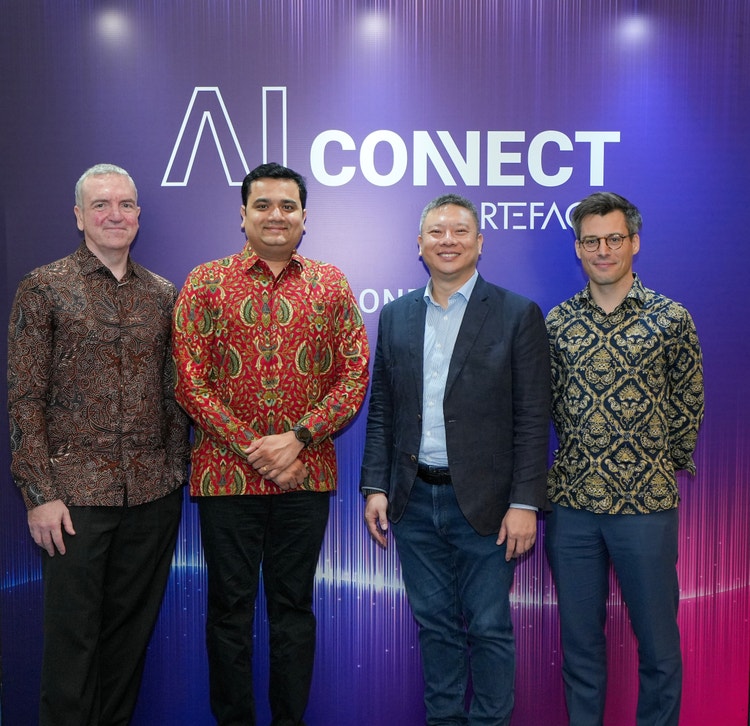
Banks are under pressure to respond to changing customer needs while managing large volumes of data. In Indonesia, one approach is taking shape through a collaboration between CIMB Niaga, Google Cloud, and Artefact, in which AI tools are being used to support staff and improve how services are delivered.
The project focuses on building AI agents that assist employees in their day-to-day work. These tools are designed to help staff understand customer needs more clearly and respond with advice that fits each person's situation.
"Together with Google Cloud and Artefact, we're reimagining the bank's role as a lifelong financial partner for Indonesians," said Billie Setiawan, Head of Data Analytics and AI at CIMB Niaga. "By combining our banking capabilities with Google Cloud's enterprise AI and Artefact's technical consulting expertise, we're giving our teams the tools they need to better address each customer's unique goals and long-term aspirations."
Two main AI agents are part of this effort. Both were developed by CIMB Niaga's internal AI team with support from Artefact, using Google Cloud's Vertex AI platform.
One of them supports relationship managers who work with customers on financial planning. These staff frequently need to track market changes while also keeping up with each client's personal goals. The AI agent helps by pulling together market data and summarizing trends in a way that is easier to use.
Instead of sorting through large amounts of information, relationship managers can rely on the tool to highlight what matters. It connects market insights with key life events, such as buying a home or planning for retirement. This allows workers to prepare advice that is more specific to each customer's situation rather than offering general recommendations.
The second agent is used in contact centers, where speed and accuracy are critical. Customer service staff frequently need quick access to product details or internal procedures while handling calls. The AI tool works alongside them during these interactions and surfaces relevant information in real time.
This reduces the need to search through internal systems while speaking with customers. It may also help staff resolve more complex questions with fewer delays. Over time, the system tracks patterns in customer interactions. These insights can be used to guide staff training and improve how the service team responds to common issues.
Both agents rely on a central knowledge system built on Google Cloud. This system stores the bank's internal data, policies, and product information in one place. Unlike general AI tools that pull from public sources, these agents use verified internal data, which helps keep responses consistent and relevant.
Employees can interact with this system through a search tool that works in a conversational way. Instead of utilizing keywords, they can ask plain-language queries. The system then interprets the request and returns answers based on internal documents.
The setup also reflects data privacy rules in Indonesia. CIMB Niaga hosts its systems in Google Cloud's Jakarta region to meet local requirements around data storage and handling.
Michael McGauran, President Director of PT Artefact Consulting Indonesia, said the project focused on building a system that can be reused and expanded over time. "We engineered an automated, reusable pipeline that handles document ingestion and agentic workflows while maintaining peak system performance," he said.
Mark Micallef, Managing Director for Southeast Asia at Google Cloud, pointed to a broader shift in how banks are adopting AI. "AI transformation in banking isn't about adopting siloed, point solutions; it's about implementing a unified platform-first strategy that enables every employee to access role-specific tools and insights, at the exact moment they need them," he said.
The work reflects a wider move in the banking sector toward using AI to support staff rather than replace them. In this case, the tools are meant to help employees respond faster, use data more effectively, and provide advice that better matches each customer's needs.