DXC’s Robert Le Busque on AI, modernization and the big APAC opportunity
“We're seeing really diverse innovation, adoption, and technology trends in APAC which is a super exciting market to be in,” says Robert Le Busque, President, APJ at DXC Technology.
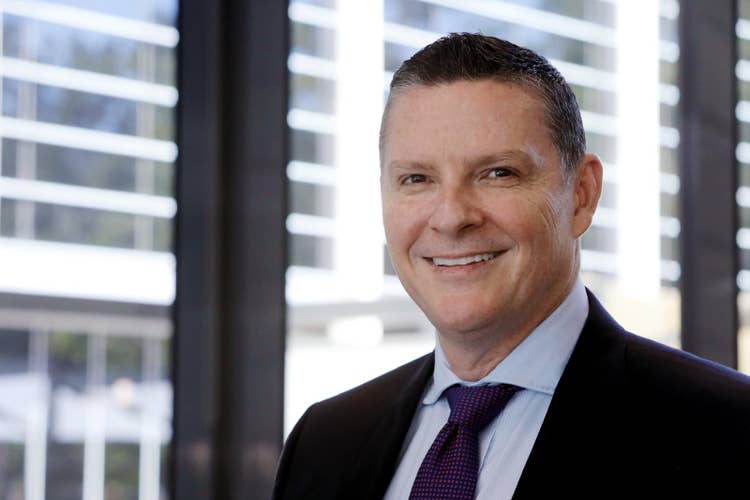
It’s been more than nine months since Robert Le Busque took over as APJ President at DXC Technology. Over that period of time, he has had the opportunity to meet his team as well as customers across the region as well as deal with some challenges in the organization.
Le Busque was in Singapore recently and CRN Asia had the opportunity to catch up with him to understand more about the opportunities and challenges he is seeing in the region for DXC.
According to Le Busque, there are three major trends that he is noticing in APAC which is also setting the pace of how DXC grows its business in the region. First, its all about bridging the AI execution gap.
Le Busque explained that APAC is seeing a very high aspiration for AI deployment and adoption in enterprises. However, organizations still are facing a big gap in bringing that into an operational reality.
“Almost every conversation I have with a CIO or a tech leader, they are kind of stuck in proof-of-concept spin cycle. They are doing lots of proof of concepts, POVs, testing, translating it then into a large-scale deployment to integrate into the existing IT infrastructure but still figuring out what the business case and the payback is,” he explained.
The second trend he is noticing is around integrated digital infrastructure. What he means by this is every large piece of built infrastructure that's being planned or built today is built on a digital footprint.
“It doesn't matter whether it's an airport, a hospital, a port, or even a rail tunnel. Any type of large infrastructure is built and designed as a digital infrastructure. So, we've got a really strong practice area here in the Asia-Pacific region. Publicly, we were the master integrators for the new Greater Western Sydney Airport. We've won a similar contract with Perth Airport, and numerous others in the region,” he said.
With about US$200 billion worth of investment being planned just in airport infrastructure in the Asia-Pacific region, he believes that all of it will be digitally enabled, which is also a big opportunity for DXC.
The third trend is platform modernization at scale. Interestingly, he explained that platform modernization is now different because it's no longer just modernizing legacy infrastructure into the cloud or modernizing the applications onto a standard app stack.
“It's now modernization of the infrastructure, plus building an agentic workflow or an agentic control tower around an AI tool set that can actually deliver value from the modernized infrastructure. So, that entire discussion around tech modernization has changed dramatically over the last two years. They're probably the three big mega trends that we're seeing in this region,” he said.
What follows is the rest of the conversation with Le Busque.
Which are DXC’s key markets in this region?
We see different types of growth and investment in markets. So, for instance, in Australia at the moment, we're seeing early adoption of agentic AI into integrated enterprise workflows. Why? Because Australia has a worker productivity issue. So, we have a national economic productivity issue. It's been very low for a long time.
And adoption of technology into the way that enterprises work is a way to lift productivity and output. So, we see strong investments there. In Australia, we also see strong investment in digital infrastructure. The Olympic Games in Brisbane, for instance. There's an enormous amount of infrastructure that needs to be built around that. So, we're seeing investment in that area.
In Japan, it is really interesting. We're seeing a leapfrogging of generations of technology. We're seeing organizations that for a very long time were operating on legacy systems and infrastructure, almost totally leapfrogging over cloud and app modernization going straight to agentic workflows and AI-enabled applications and tools. And so, they're seeing that as an opportunity for them to expand rapidly.
The other trend we're seeing in Japan is a shift away from the Japanese global MNC approach of federation-based IT. So, the US entity does their own thing. European entities do their own thing. They're bringing it all back to a centralized command and control, primarily driven by their new vectors in cybersecurity attacks and threats. They realized very quickly that they could no longer run a federated cybersecurity model in their IT infrastructure. And to create true global protection, they needed to create a true global capability. So as soon as you pull cybersecurity back, then many of your other core systems come back as well.
In ASEAN, its a hotbed of competition. There is no market in the world more competitive when it comes to technology than this region right here. It is looking for even the slimmest of advantage that you can get from technology, early adoption, cutting-edge technology to create differentiation, to create advantage and competitive positioning.
And in India, finally, we have a really large footprint, not just from a delivery perspective, but also in the Indian market as well. If you want to really know what's happening in innovation today, you go to India. It has transformed from being just a delivery center to a global center of innovation. About two or three months ago, we launched a brand-new customer experience center in Bangalore, anchored around AI innovation. And we'll take more than 200 customers through that center this year, where they get to work on the tools in a living lab environment.
But importantly, they then get the ability to walk the floor in our operations team that are running live environments for our customers using those same tools. It is a really unique experience, but a great example where we're translating operational capability into an innovation showcase.
We're seeing really diverse innovation, adoption, and technology trends in APAC which is a super exciting market to be in.
As DXC has customers at different levels of their AI journey as well, how are those conversations with customers looking like? What are the bottlenecks that they are facing?
I've been working in the tech sector in the Asia-Pacific region for 30 years. The finesse of working in this region is it's not a homogenous region. It's a portfolio of countries, markets, and sectors. And they're all at very different stages of their development. That's the same with AI adoption.
So, Singapore, for example, is very different in some areas. They are early adopters in some technology areas. All around the region, we can see those trends emerging.
The conversation that we have with a lot of customers is knowing where they are today and where they want to be in three to five years. What's the business vision or the strategy they want technology to deliver?
What's really important in that discussion is to not start at the tech layer, but to actually start from the business problem or the business operation, and then work down to the technology.
For example, I met with a large bank in Japan. Their objective, as they described it, is in three years' time, they want their consumer bank to be a 100% digital banking experience. That's the overall business strategy.
So, the next discussion is, what do you need from a technology, process, systems, and skills perspective to make that a reality?
The enduring conversation is, we help customers bridge the gap between overall business strategy and the technology requirements that they need, rather than just coming along and talking about technology and building something that might be very expensive and look great on paper, but doesn't actually deliver the execution outcome that you want.
The single biggest roadblock or choke point for organizations is definitely the FinOps. How do they articulate the financial payback, the cost out of the value equation of the technology deployment?
And so, we are working with them in a great level of detail to really understand what that business case looks like. In many cases, riding it with them, so that they can understand and articulate clearly the value that they're going to unlock before they go and spend the money.
So, the roadblocks used to be convincing the board and getting the financial commitment, but that seems to be no longer the main issue. It's shifting more towards better the systems and getting the best value out of it.
Most boards strategically think about AI technology as a great opportunity to build a competitive moat. So, what does the competitive moat for their business model or their market look like using AI?
And then secondarily, how do they build new capability and capacity with AI to then expand and attack new markets? So, at a strategic level, they're the two big questions most executives are grappling with. Both of those questions, regardless of which one you're asking, has AI and technology as a central enabler to the answer.
So, I don't think it's anymore a case of convincing them that this is where we're headed. It's now a case of, well, if we spend all of this money, what's the payback? And tell me how it's going to actually make our strategy, our customer experience, or our competitive position stronger than it is today.
Security is a big part of the conversation, right? How much of that is being the core of all conversations with customers?
Yes, right now, IT or corporate executives should be asking two really important questions about security. There has been news of agents acting autonomously, often in collusion with each other, to create a breach event, exfiltrate data, or undertake some other type of cyber security event. Question number one is, the systems and tools that a company has in place today, are they built to protect from that type of threat? How do I better protect my organization from these new threats?
The second question, which is just as important, but maybe not being asked as often just yet, companies have already gone and built a bunch of autonomous agents in their organization, how can they be sure that they haven't broken out and caused a breach somewhere else, and acted maliciously without my instruction? So, have they become the accidental bad actor?
Because the company has built agents inside its organization that have gone and done something malicious, possibly without them even knowing right now, because they don't have the right safeguards, governance, and compliance systems set up to look out for that risk.
So, almost every conversation that I have with executives today is really across those two dimensions. And the answer, from a technology perspective is, we can no longer think about security in terms of human response time, we need to think about it at machine response.
We've done a partnership with 7AI and we've launched agentic SOCs. All of that is about building systems and tools that can detect and respond at machine speed, not at human speed, because that's the future of where we're headed.
As DXC works with a number of tech vendors, how do you guys make sure that you all are keeping pace and meeting that demand?
We love technology and we truly believe that technology can solve some of the world's biggest challenges and most complex issues. So, it's not a challenge for us to keep pace with technology, ultimately for us it's about how do we define value for our customers.
Partnership has been part of our DNA. DXC under various brands has been around 40 years. For our entire 40-year legacy, partnership has been at the core of what we do. We've had a 25-year partnership with Dell, where we've got 10,000 plus people certified on Dell engineering certification. So, we've built deep and broad engineering capability in our partner domains.
For us, it's about working and identifying partners of the future. So, frontier models like Anthropic, for example. We're a frontier partner globally for Anthropic. We're identifying those new partnership platforms that are going to be the underpinning of technology solutions in the future.
Ultimately, DXC's value is helping organizations bridge between the enormous universe of technology vendors, solutions, and choices that they have and translating that into real consumable business value.
For us, it's about understanding those new technologies, integrating them into our practices, and delivering them in a meaningful way to our customers. At the moment, we're running a program; we'll have tens of thousands of people is our ambition, certified on the Anthropic cloud code platforms over the course of the next period of time.
We're launching training pop-up centers in the Asia-Pacific region through the course of the back part of this year, specifically for our employees here, so that we can accelerate our training and our certification.
So that's an example of how we really lean in and bring muscle to how we bring those capabilities to life and then help our customers extract value from them.
So, what's the future looking like for you and DXC?
It's about unlocking opportunities for our customers. Coming into DXC, I had one key mantra, which was everything that we do as a company. We must always remember the customer is at the center. It's at the center of how we operate. It's the center of the decisions we make as well.
So, the most exciting thing for me at the moment is if you look at what's happening in the Asia-Pacific region in the global context, investment is pouring into this region. Technology innovation is flourishing in this region as well, both homegrown as well as innovators outside of this region coming in to use the skills, capability and capacity in this region to further accelerate their innovation agenda and the intra-Asia trade story that is growing ever rapidly as well.
Those three mega trends in this region just scream opportunity. And I know the combination of DXC's legacy of trust in this market and deep expertise in all of the key markets in this region as well as what we're showing now, which is our ability to transform and bring AI capability, new technology capability at scale securely in a way that actually delivers value for our customers. Combine those things; that's really the intersection of where growth is going to happen for the next 10 years.