Kyndryl: APAC enterprises must close modernization gap as agentic AI accelerates
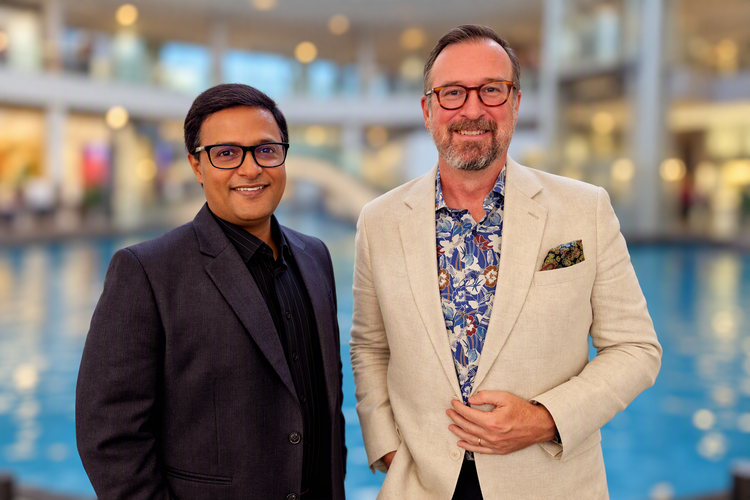
Kyndryl's Dr. Vishnu Nanduri, Head of AI & Innovation, and Kevin O'Leary, Head of Security & Resiliency explain why organizations in APAC need to speed up their modernization journey.
According to Kyndryl’s 2026 Modernization Report, organizations in Asia Pacific are expanding their use of cloud, edge and other technology environments despite many still caught up on their modernization plans.
The report revealed that 49% of APAC organizations are behind their modernization goals. This can be rather concerning given that delays can not only lead to higher long-term costs but also face an inability to adopt new capabilities faster as well as be challenged in meeting new security or compliance vulnerabilities.
At the same time, the report also revealed that organizations need to modernize as they face mounting performance, security and integration challenges as well as business agility and innovation. Organizations are also struggling in control and governance as they look to implement advanced AI capabilities.
Kyndryl's Dr. Vishnu Nanduri, Head of AI & Innovation, and Kevin O'Leary, Head of Security & Resiliency explain more to CRN Asia on the trends they are seeing in the region as well as why organizations in APAC need to speed up their modernization journey.
AI for Revenue generation
“We're finding agentic AI to be the trend for the next couple of quarters. We’re working on building agentic platforms for clients where we're building agents that are with humans in the loop but are also able to access information safely and be able to make decisions for the customer,” Dr Nanduri explained.
He also explained that while there are modernization concerns, there still organizations that are deploying agentic AI, with a few clients in the region already reaping the benefits from it.
“I think more importantly, what we're also seeing is AI moving from productivity to revenue generation. It’s not about how much time a company has saved or how much productivity it has given employees but really turn the corner to help business users make decisions that can drive business value and revenue for the organizations. And these are some things that we are building for clients,” he said.
At the same time, Dr Nanduri also shared that agentic coding has come of age in the last couple of months with tremendous productivity gains. The question now is how do organizations leverage AI to help modernize applications? This is where AI can help developers in coding but within a harness to ensure that the code is properly reviewed, checked and validated at every step of the way.
Secure AI usage
On the cybersecurity side, O’Leary shared that when it comes to agentic AI, companies are starting to realize that they have to look at agents as if they were individuals and employees.
“They need to start thinking about how they manage agents. There has to be some control over this and how do they manage it. So, on one side, the human in the loop is extremely important, at least in terms of the testing phase. It's not that agents can't operate independently, but they have to have their guardrails around them, so they have to have the governance,” O’Leary said.
Moreover, with the concerns around rogue and autonomous agents on the rise, O’Leary shared that more organizations are waking up to terms of how to manage that.
The other aspect of AI security for O’Leary is how organizations manage the usage of AI, especially in the security operations center (SOC).
“If you think of your everyday work within the SOC, there's a certain number of events that are triggered, there's L1 activity, there's L2 activity and all of this happens on a human basis. You could automate a lot of that, and you have the agents operating through that. However, if you have a breach, the possibility for an explosion of token usage might go through the roof.”
“So, that kind of management is extremely important. So, building that architecture means that you're still going to have burn-through tokens if you're relying on LLMs at any point within your technology's stack for security, but it reduces the impact of that. So, that kind of cost control is very important, and I think that's something generally people have been concerned about,” he explained.
Securing and managing agents
As AI models are designed to comply, O’Leary pointed out that they will try and get to the end and do that almost through any means possible. This is where he believes it can be a worry because agents are communicating with each other and are starting to use their own shorthand and their own language buttons that are not human-readable.
“They can create their own language, that is entirely predictable because if you're asking these agents to be efficient, they'll find a way to communicate amongst themselves and make themselves more efficient. So, that's always being understood. Also, the ability to evade certain controls to complete a task probably is predictable as well because the AI models are designed to comply and to try and get to the end and they'll do that almost through any means possible,” he said.
As such, there is a strong need for guardrails to be put in place.
“But the one thing I would say, to be very clear about it, is that behavior is very worrying, and I think that's something that needs to be dealt with right now. If we think about what the impact has been, a certain amount of it has been overstated. So, even if you think about Hugging Face and the other AI companies that have hacked each other, it's partly down to their own security establishment, and they have managed their own security. That's why you often see AI going for AI. There's a real reason for that,” he added.
Referring to the incident with the Australian government, O’Leary shared that it mostly came down to the use of legacy systems, outdated systems. He believes that these are things that probably they would have been advised to update and to manage more closely anyway.
“It just reinforces the fact that your traditional security can't be ignored. You might have gotten away with this for a while, but now through AI, there's no hiding place. So, you'll have to update and modernize your security. You don't need AI in there necessarily, you need some of it, but you just have to follow the trend of modernizing your cybersecurity tech stack anyway,” he added.