APAC Solution Providers: Why cybersecurity must balance AI autonomy and human oversight
Solution providers in the region share more about the challenges with cybersecurity today, from dealing with rogue agents to autonomy in cybersecurity.
When it comes to cybersecurity adoption among businesses, no one knows it better than solution providers. Not only do they have the capabilities and skills to support organizations in managing their cybersecurity concerns, solution providers that have a strong focus on cybersecurity, also understand what works best for their customers.
CRN Asia caught up with a few experts from solution providers in the region to understand more about the challenges with cybersecurity today, from dealing with rogue agents to autonomy in cybersecurity.
Here’s what they had to say:
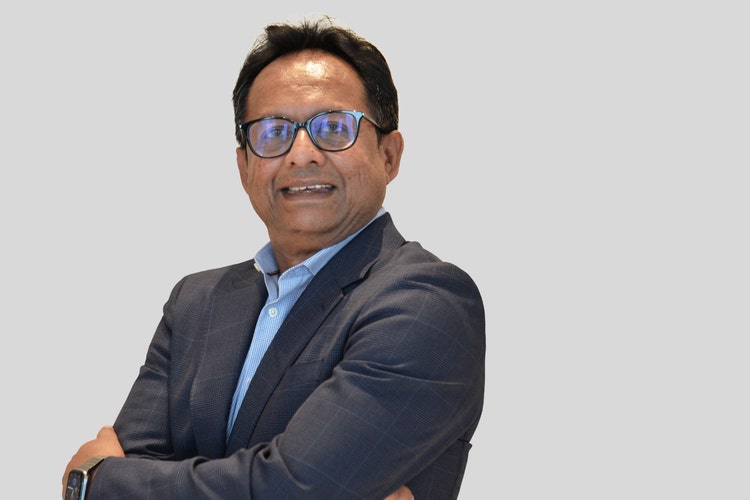
Keith Samuel, Cybersecurity Practice Lead, APAC, SoftwareOne
The fastest-growing attack surface in enterprise IT isn’t a device or a network — it’s the AI agent. With IDC forecasting 1.3 billion AI agents in use by 2028, each one is a non-human identity that can be over-permissioned, impersonated or quietly turned against its owner. Shadow agents, prompt injection and AI-mediated data exfiltration don’t surface in traditional, user-centric monitoring.
Every identity, human and machine, now has to be discovered, governed and held to least-privilege access. Defense has to move at the same speed. AI already triages alerts, detects novel attack chains and accelerates containment faster than any human SOC. But autonomous response without human judgement is simply a faster way to be wrong.
The harder problem is data: AI assistants reach into email, documents and chat, and without classification, labelling and data-loss controls, a single prompt can surface sensitive content no one meant to expose. Governing data before deployment, shadow AI included, and aligning to regimes like Singapore’s PDPA and MAS-TRM is what keeps AI an asset rather than a liability. So where is the human factor? At the center.
AI takes on detection and first response; people own oversight, judgement and accountability — deciding what agents may access, and when to pull them back. With security talent scarce across APAC, few organizations can staff this alone.
SoftwareOne works as a partner across 70+ countries to help customers govern identity, data and AI posture, extending their teams without taking the decisions out of their hands. The future of cybersecurity is AI operating at machine speed, governed by people focused on the decisions that matter.
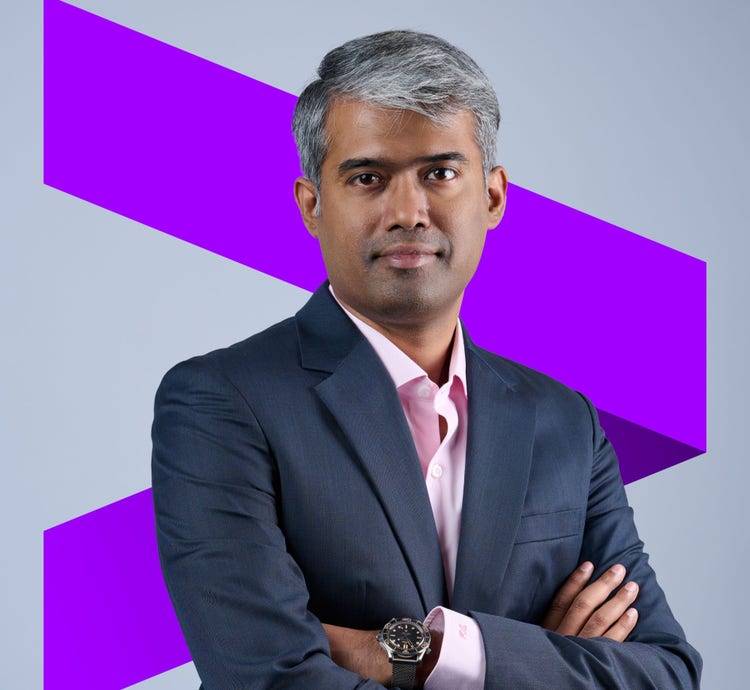
Vinod Shankar, Security Lead, Southeast Asia at Accenture
Cyber threats are evolving faster than traditional enterprise defenses can protect. Frontier AI models have drastically collapsed the window between discovery and exploitation of vulnerabilities from weeks to mere hours.
According to Accenture's research, frontier AI models now succeed on their first attempt at finding and exploiting vulnerabilities 83% of the time, a rate that was near zero not long ago. Today's security teams are caught in a pincer movement: the attack surface expands as enterprises manage hybrid and multi-cloud environments, IoT devices, remote workforces, and increasingly complex supply chains – while adversaries operate with machine speed and human ingenuity.
To confront this reality, organizations must shift from reactive predict-and-control defenses toward true cyber resilience anchored on a secure digital core. The core challenge is not a lack of technology, but a limitation of operating model – one that must evolve from scripted automation toward AI-led autonomy.
Yet our research finds that 54% of executives still believe strong protection controls alone are enough to ensure business continuity – a dangerous assumption when recovery from a serious incident averages three to six months, not the 10 days most leaders expect. Establishing a strong data foundation is the glue of this strategy: enforcing strict access controls to safeguard intellectual property, preserve sovereignty, and maintain governance across infrastructure, data, and models.
Technology alone cannot secure the enterprise. Generative AI is a force multiplier capable of augmenting security analyst tasks, but keeping humans in the lead is what ensures that we define the boundaries, contextual policies and operational guardrails within which autonomous and agentic AI operate. A modern SOC is not defined by headcount but by intelligence – where outcome-driven autonomy turns analysts into risk strategists, not alert handlers. This is especially critical given that AI-enabled cyberattacks grew 89% year-on-year in 2025.
The mandate for cybersecurity must evolve from an operational cost into a strategic enabler of continuous reinvention. By making security a foundational part of how organizations are built and not an afterthought, organizations can build the capabilities to absorb shock, sustain operational continuity, and protect digital trust. Autonomy in security isn't the absence of humans – it's the presence of wisdom in the loop.
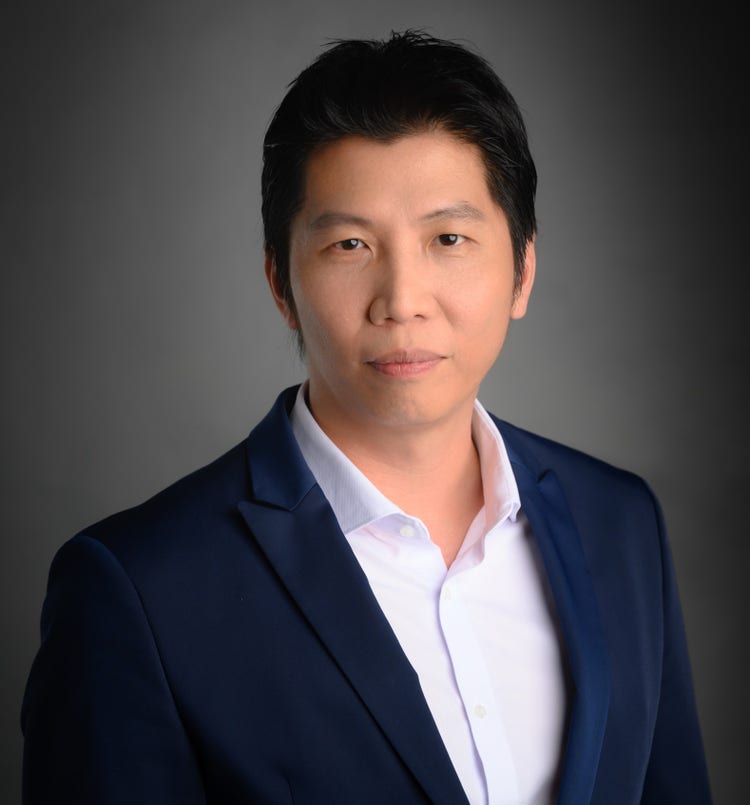
Chua Zong Fu, Executive Vice President of International Business & Commercial, Ensign InfoSecurity
Artificial Intelligence allows threat actors to identify and exploit vulnerabilities at unprecedented speeds. Keeping attackers out is only half the battle; the other half is containing those who breach the perimeter before they can move laterally.
Defenders must accelerate patching cycles, tighten operational processes and deploy continuous, agentic scans to uncover weaknesses before threat actors do. This helps prevent initial access; however, it cannot be the only line of defense. A single compromised account should never grant access to the entire enterprise.
When Ensign InfoSecurity tested 10 frontier AI models in its controlled cyber range mimicking multiple stages of a realistic enterprise cyberattack chain, every model gained initial access to the enterprise system. However, they struggled with credential harvesting, lateral movement, and bypassing Endpoint Detection and Response.
Strong identity controls, network segmentation and endpoint detection must restrict what attackers can do once inside. These controls can slow an attacker’s progress and buy defenders time. However, continuous monitoring must be supported by reliable information about identities, permissions, host activities and business dependencies. Without this context, defenders risk overlooking an intrusion or get distracted by the surge in agentic triggered noisy alerts.
The strategic question then is how organizations use the time bought effectively.
As AI enables attackers to operate faster and at scale, defenders should use AI to investigate alerts, correlate suspicious activities, and accelerate response times. However, faster investigation achieves little if containment is delayed by legacy approval bottlenecks. Businesses should review their incident response plans and establish clear, pre-agreed rules on which actions can be automated and which require human authorization, including outside office hours. These arrangements must be tested before an incident.
While human judgment remains critical in setting those boundaries and handling exceptions, the ultimate objective is timely containment. The historical approach of change management, relying on multiple levels of human approval is no longer viable, as high-speed agentic attacks will simply overrun manual defenses before humans can even respond.