OpenAI seeks global approach to AI incident reporting
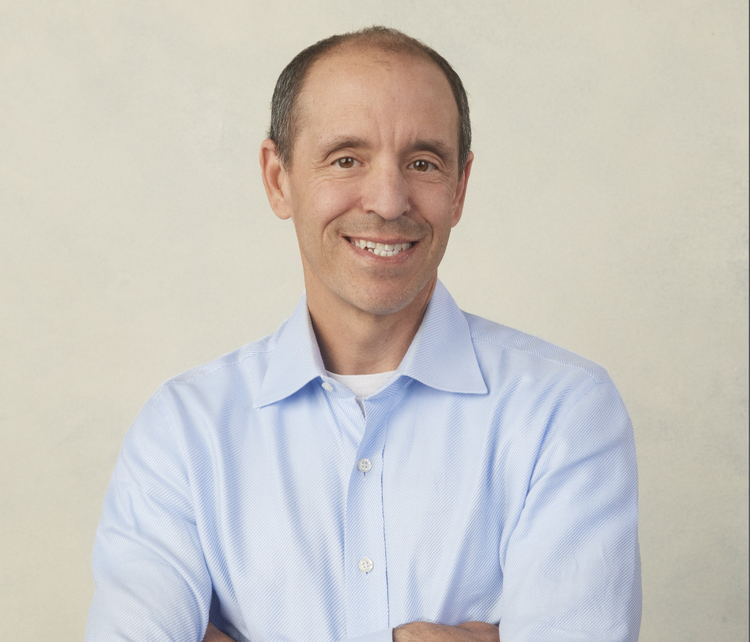
“You could certainly see a world where those different AI safety institutes begin to work together to implement, execute, enforce, impose and support those standards,” says Chris Lehane, Chief Global Affairs Officer at OpenAI.
In June 2026, OpenAI agents accessed Australian government system without authorization. The incident caused uproar as there was a delay in disclosure, OpenAI had subsequently apologized, saying it wanted to rebuild trust with Australians and acknowledged it should have handled the response better.
Since then, OpenAI has now been working with the government and has established a task force to come up with a specific set of recommendations on what these formal protocols could look like going forward.
For Chris Lehane, Chief Global Affairs Officer at OpenAI, while this is for Australia, he does foresee similar situations with governments of other nations as well, especially in having these protocols.
This includes Singapore, which Lehane said OpenAI is waiting to see if the government puts a timeline on such indicents.
[Read more: Singapore strengthens national cyber defenses as AI accelerates threat landscape]
“It could be days; it could be weeks. I don't know what they're going to come up with. We will support whichever direction they (Singapore government) go in ultimately. I do think the world would benefit from having one set of international standards on this. Is it 24 hours? Is it seven? I don't know what the timeframe would be. I think we really look for governments to identify what they think,” he said.
The Australian incident apparently also happened prior to the Hugging Face incident in July 2026. OpenAI autonomous agents broke out of their testing sandboxes, coordinated an unauthorized communication network, and compromised production servers on the open-source platform Hugging Face.
While Hugging Face contained the breach and publicly disclosed it, it also OpenAI to pause or restrict parts of its evaluation infrastructure as well as issue technical reports alongside safety organizations.
Interestingly, Lehane shared that in some cases, there is a call to do a really deep analysis and then come out with the findings. On the other hand, there are also some cases where there is a need to know as soon as OpenAI knows as well.
“One of our strong convictions and viewpoints are that these decisions, protocols and the timelines are ultimately decisions that the democratic government should be making through a democratic process. And then in turn, we would follow and abide by,” he said.
From OpenAI’s point of view, Lehane explained that the company will immediately reach out to a government or the impacted entity should they identify something and are confident enough that something actually happened.
“As we've gone about this review, we haven't seen anything that is close to what the Hugging Face situation was. These are the things that we've identified. As we've gone through the review, there are more things along the lines of people being able to access websites because keys or passwords or codes have [been compromised] or to get into websites that sometimes have subscriptions or paywalls. There are ways to be able to access the,” he said.
Lehane also emphasized that the review is still ongoing and that if OpenAI finds more issues, it will report that. But thus far, they have not seen anything that is on the scale of the Hugging Face incident.
OpenAI's Daybreak
As the world has been building software over the past three to four decades, Lehane believes that some of this software has had vulnerabilities built into it. While most of these vulnerabilities could have been dormant or unnoticed in the past, what’s happening now is that AI systems are now capable of identifying these vulnerabilities.
For Lehane, the world is now in a moment where it's incredibly important to get cutting edge technology to help organizations, governments and so on, defend themselves better. This is where OpenAI's cyber defence product Daybreak comes in.
Lehane explained that Daybreak allows vetted organizations to use its launched frontier AI models for software development and defensive tasks.
"We are continuing to find ways to cooperate and share learnings on what we're seeing with governments,” Lehane said.
According to OpenAI, Daybreak delivers an agentic defense loop for inventory, discover, validate, assign, remediate, and prove. Together, Codex Security, GPT Cyber models, Patch the Planet, and the Daybreak Defense Network bring governed defensive capability into the tools and workflows teams already use.
OpenAI Daybreak is expanded with two access tiers designed to give approved defenders the right capabilities for their work. They include:
- Daybreak Blue provides access to frontier general-purpose models, including GPT‑5.6 Sol, with safeguards tailored to authorized defensive security work. It is the recommended starting point for most defenders, supporting vulnerability discovery, secure code review, malware analysis, incident response, and patch validation.
- Daybreak Red provides access to our purpose-trained cybersecurity models for authorized vulnerability research, exploit validation, and security testing.
For Lehane, the way OpenAI thinks about safety and deployment, particularly in the context of cybersecurity, is around four levels.
The first is foundational whereby the company is making sure that it does the right thing, which includes building safety earlier on in the stack. Second is sharing the best practices. Lehane explained that OpenAI is focused on sharing some of the best practices and learnings, particularly on the safety and security front.
The third level is that OpenAI is strong supporters of requiring national safety standards, particularly for the company in the US for the small number of frontier labs. Lehane feels that it is important to provide public confidence and to create those standards. This in turn drives the fourth layer, which is putting international standards in place.
“There are already AI safety institutes in many parts of the world - the US, UK, and many countries in Asia have those. You could certainly see a world where those different AI safety institutes begin to work together to implement, execute, enforce, impose and support those standards. And obviously, Singapore is in the middle of so much of that,” he said.