Proofpoint: Human risk remains top concern for 92% of Singapore CISOs
84% of CISOs expect to manage AI-related risks without a proportional increase in resources or expertise in the next two years, according to findings from Proofpoint’s 2026 Voice of the CISO report.
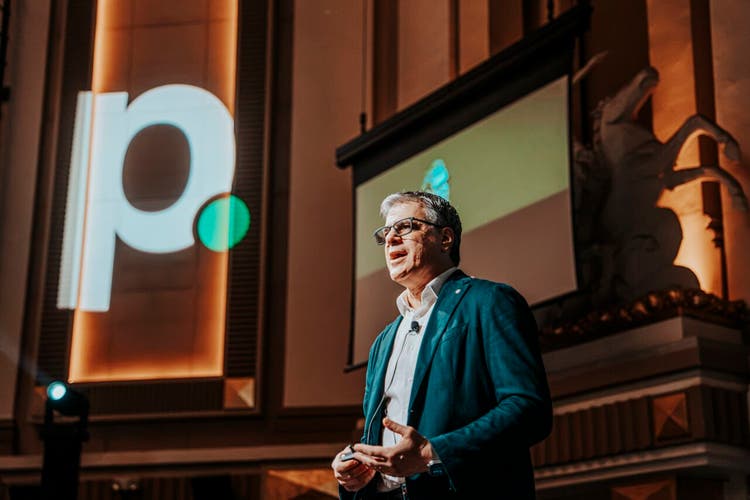
According to Proofpoint’s 2026 Voice of the CISO report, human risk remains the biggest vulnerability for organizations with 92% of Singaporean CISOs now identifying it as a major concern.
The report, which included findings from 1,600 CISOs across 16 countries revealed that human risk also with concerns on data, applications, and AI systems embedded in everyday work continue to be challenges for CISOs. The study also revealed that 84% of CISOs expect to manage AI-related risks without a proportional increase in resources or expertise in the next two years.
Patrick Joyce, global resident CISO at Proofpoint explained that as AI is fundamentally changing the CISO mandate, they are being asked to not just protect the business from technology risk but also help it embrace transformative technology safely and rapidly.
“As AI assistants, copilots, automation, and public GenAI tools become embedded in everyday business processes, CISOs are relied on to enable innovation while preventing sensitive data, privileged access, and critical workflows from being exposed. That dual responsibility is quickly becoming one of the defining challenges of the role,” he said.
Apart from CISOs being expected to secure and champion AI, the report also revealed that while 85% say enabling the safe use of AI assistants, copilots, and automation is a top priority over the next two years, 84% are expected to manage AI-related risks without a proportional increase in resources or expertise.
At the same time, 64% of Singaporean CISOs stated that their organisation is unprepared to cope with a targeted cyberattack. Concern is increasingly centred on technologies embedded in everyday work, including collaboration platforms (32%), cloud storage and file-sharing platforms (32%), APIs and automation tools (32%), public generative AI tools (31%), and SaaS applications and third-party integrations (29%).
The human element remains both a key component and also a weak link when it comes to AI. The findings revealed that while 90% of Singaporean CISOs believe their controls effectively mitigate risks introduced by AI, SaaS, and modern work patterns, 91% believe employees are likely to use AI in ways that could expose sensitive data. 86% are concerned about customer data loss through public GenAI tools, and 89% block or restrict employee GenAI use.
Securing humans and agents
According to Tom Corn EVP & GM, Threat Protection Group for Proofpoint, there are so many similarities between humans and agents, especially when it comes to seeing which really is the weakest link in cybersecurity today.
“Humans fall to social engineering. Agents fall to prompt engineering. Humans can do a bunch of things they're not supposed to. Agents can execute code they're not supposed to. Humans can access data they're not supposed to. So can agents. There are so many similarities in the nature of the problem that I don't think it's really solving this is not about, it is a different approach to these.”
For Corn, its all about users and data and being able to manage this.
“We've been trying to train people to be more aware and more effective in their security awareness and behaviours for years. And so, you have a bit of built-in intelligence within that. We can code some of that. We can build guardrails around that. But it still will take time to refine that and probably no differently than it has taken time to refine that for humans,” he added.
Doing more with less
During a media briefing session at Protect Tour Singapore, Joyce shared that security is being forced to become an accelerator and enabler of the business. He explained that the way organizations have been doing this successfully is by embedding security engineers, security architects, as far left as possible into the business, enabling more conversations to take place.
However, Joyce also pointed out that companies are not allocating sufficient budget for security teams and CISOs to be fully able to deal with the challenges.
“It's being invested into AI, into technology, so the company can grow itself. We found good success as a result of having earlier conversations of being able to get money attached to the project instead of information security because you can show value there. The other key thing is to build security into the process. Don't think of it as a bolt-on. Think of it as a core element to the design of this process,” he explained.
Corn echoes this and explained that most organizations are switching budgets from human capital to tokens. This is making companies rethink the roles of people and technology in solving the security problems organizations face today.
“Nobody's getting more resources. And the resources you have, you want to use them on higher tasks, more brain power, more skill, more creative work. So, if there's a way to use agents and technology to also simplify all those feeds, all that data, and synergize that in a useful way, then you're doing a better job of utilizing resources as a leader because you don't have a room full of people that can do this, and that's not the most effective way to do it anyway,” he said.
For George Lee, Senior Vice President, Asia Pacific & Japan, Proofpoint, the ASEAN region in particular is focused on doing more with less simply because they lack the resources to tackle all the challenges. This is where he believes Proofpoint is capabilities for enterprises can also be leveraged by the mid-market and SMBs in the region.
“We go through about 3.5 billion emails a year to find threat signals. Our mid-market and SMB customers will benefit from the same threat signals that's attacking the large enterprises that will be probably used as an export to attack them. So, they're getting the kind of best of breed because just by the sheer volumes of threat that we have seen,” Lee said.
Lee added that these segments of customers will also have access to purpose-built platforms which is designed for them, which Proofpoint will be unveiling soon.