Too many security tools, too little readiness: NTT DATA’s warning for enterprises
“We’re in the complex times of cybersecurity,” says Ashish Thapar, Head of Cybersecurity Business Unit at NTT DATA (Asia Pacific).
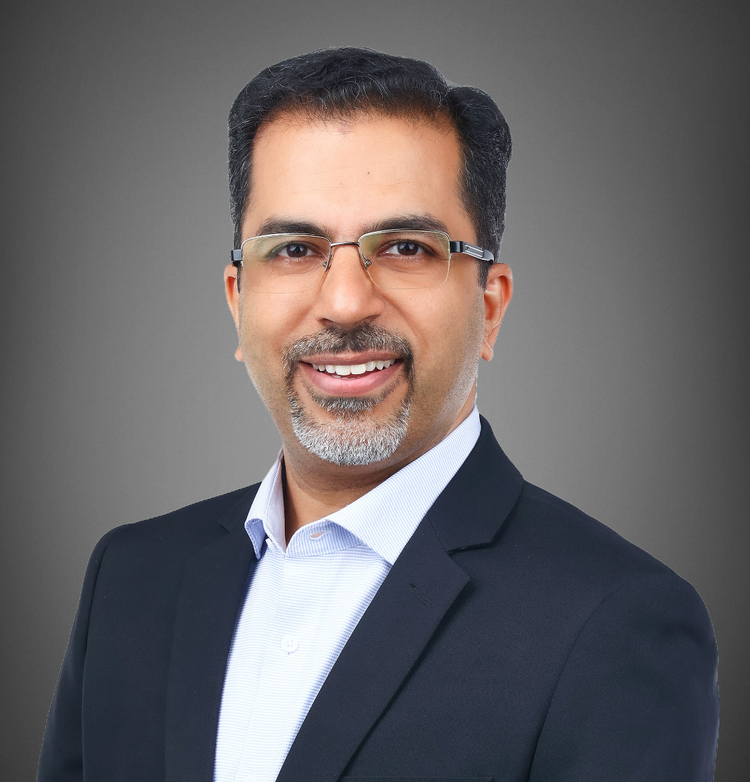
For Ashish Thapar, Head of Cybersecurity Business Unit at NTT DATA (Asia Pacific), one of the biggest trends currently in cybersecurity is the lack of preparedness as organizations continue to invest heavily in sporadic technologies.
Speaking to CRN Asia at Tech Week Singapore, Thapar pointed out that there is currently too much vendor sprawl, with cybersecurity inversely proportional to complexity.
For Thapar, this one of the major challenges that NTT DATA clients are grappling with, whereby they either have less complexity with more security or more complexity with less security.
Another challenge he is seeing is an increase in cyberattacks that are malware-less. Thapar explained that these threats do not have a binary code that can be considered a threat and break in using authorized credentials. He believes that there is a huge leverage of identity compromise kind of based attacks.
“We are increasingly seeing vulnerability exploitation, which means you would typically not have a binary piece of code that would come there and explore and would have fire splinters flowing everywhere, and everybody can notice. But you basically will have an exploitation of a vulnerability which is not known or probably is recently discovered and not publicized yet. When those exploitations happen, the typical SOC, SIEM and such fail miserably because the telemetry doesn't come in. It just keeps silent. Hence, this is a preferred mode of operation for the bad guys,” he explained.
At the same time, Thapar also stated that the advent of Frontier AI is another challenge. Highlighting the recent events in Australia, he believes that this a wake-up moment.
“It is a completely different narrative. The agents are doing something that they are not supposed to do. They were instructed not to do so and still there are incidents and breaches happening. So, it's a wake-up call, and I don't think clients are ready for it, which is probably exactly why we are working with clients on Frontier AI readiness. So, these are complex times,” he said.
What follows is the rest of the conversation with Thapar as he discusses how organizations can deal with the complexity in cybersecurity, from AI in cybersecurity to post quantum cryptography and having the human in the loop in security.
Can organizations afford readiness given the increasing cost and complexity in cybersecurity?
It’s all about how they utilize existing investments and drive cybersecurity investment prioritization. One of the cheapest controls, but most often forgotten, is blast radius reduction, which is micro segmentation or segmentation. Segmentation can be achieved by just an ACL.
Segmentation can be achieved by not having a routable traffic mechanism between two subnets. Pure segmentation just cannot do anything. Nobody can reach that segment. So I don't think it's a very expensive affair. Of course, you would need to do discovery of your readiness from a vulnerability remediation. You would have to reinvest back into prevention.
Prevention is not a sexy thing anymore. Guess what? In today's parlance, it is the most critical thing, because when threat actors are operating at machine speed, your detection and response either has to be on the same machine speed, probably faster, or you better invest back into prevention, because prevention goes a long way.
So, I don't think it's a matter of spending too much money. You would have to invest in visibility. You have to invest in frontier AI readiness assessments. A bit of technology on the investment, or rather I would say investment reprioritization and consolidation.
Remember again, why are clients investing too much money? Because of vendor sprawl. This is your time to go back to your board and ask for consolidation of technology, consolidation of partners. That will unlock some value that you can reinvest back to strengthen your position.
While enterprises can afford to do this, what about the mid-market organizations?
When you talk about basic hygiene, you're talking about data-centric security. Before you go implementing heavy security technology, expensive consultants, you have to actually fundamentally look at the way you are operating.
Are you operating it in a way whereby your entire infrastructure, data and most importantly applications are basically sitting by the roadside, where anybody can access? Or are you driving data-centric security control?
What I mean by that is, a simple thing of just making sure that you're not collecting more than the data you really need doesn't take a million dollars. It basically takes business process re-engineering to cut yourself down and cut yourself back.
You also need to then work with some of the managed security services providers because you cannot invest in CapEx. The technology landscape is changing very fast. So, you can't shunt in, shunt out new technologies.
It is better to work with the as-a-service providers so that you basically give a price for the as-a-service model rather than investing too much security.
And last but not least, put a lot more focus into prevention. I think prevention goes a long way to limit and mitigate your risks.
How does NTT DATA support this?
So, we basically provide our managed security services portfolio. And that is meant for medium and medium-large enterprises. We provide managed extended detection and response services, managed threat hunting, managed threat intelligence, and managed penetration (pen) testing.
We are doing managed AI-based pen testing. We have our own engines who can actually continuously do pen testing for customers in a fully autonomous manner. So, I think we should also leverage Agentic to bring down the cost of services which we are doing.
Are you seeing an increased demand for managed services?
For sure, because I think for the large enterprises, it gives them a second pair of eyes to give them more assurance. And also, for the medium and large enterprises, because I don't think they have any avenue to go, given the chaos that is ensuing. They would rather go with a service provider. We do see that motion giving us tailwinds to grow this business and sell more.
NTT DATA works with a variety of cybersecurity vendors, but for a customer, how do they know what's best and who they work with?
We have strategic partners that we work with. This includes Palo Alto Networks, Cisco, Checkpoint, Zscaler, CrowdStrike, and more. These are a few partners just on the security side that we are number one in APAC.
We definitely try to see where we can position these partners, work with them to design an end-to-end portfolio, because back to my earlier point of total cost of ownership consolidation, the more clients drive platformization, the more they will unlock better value on detection and response, and they will also do cost savings.
Secondly, we are also working with other partners, which are very niche, depending on a client need-to-need basis. So, we do have a relationship with other partners, for example at the identity space or the agentic AI, which is a new emerging area, because innovation happens with startups.
And last but not least, we have a lot of R&D investment. We have our own security solutions through NTT TechnoCross, as well as some of the investing companies we have.
Looking at the pace of cybersecurity as well, how do you guys actually all keep up?
That goes back to our ‘glocal’ model. I call it ‘glocal’ because it's global and local. So, we have a global center of excellence that basically has 16 capability centers on cybersecurity.
We invest in capability development, research, platformize our own platform in intellectual property investment. And then on the local front, we basically look at skill development.
Because of our partnership with those tier one vendors, we actually have much more insight into what they are going to launch in the next six months, 12 months, 18 months. So, we get to know an insight preview on what they are going to launch, and we ready ourselves in advance before things get launched.
Also, because of our local model, we use scale and speed to train our resources certified on these technologies by leveraging not just in-country, within APAC, but basically leveraging our center of excellence to do a combined hybrid approach because we can't have skilled people on all technology in all countries.
It's a hybrid model where we have some resources in country and a lot more resources in the COE through which we drive scale and then focus on select partners because we cannot do all partners. And that goes back to the point of which are the right so-called operating model from a go-to-market standpoint in terms of the focus areas that we have and where we can drive better skills, better quality of service delivery and better innovation to deliver client cyber resilience objectives.
So, with that said, what's the roadmap looking like then for NTT DATA going forward?
Well, I think definitely we are one of the top three providers in APAC at this point and globally as well. I want to be the number one in Asia-Pacific definitely. I think what that really means for us is to continue investing in our relationships with our partners, continue investing in our innovation from a platformization perspective, from intellectual property, all the platforms we are developing, leverage our threat intelligence.
We are tier one telco and one of the tier one data center providers, which is why we are here. So that gives us a lot of telemetry and insights into how the threat actors are unleashing new tactics, techniques, and procedures and what can we really do to help our clients stay informed and thwart those attacks in advance. And then collaboratively working with industry bodies. I think we will continue to invest in our relationships.
Now another area aspect which is probably coming out here next year is quantum computing. How is NTT DATA addressing this topic?
NTT DATA has an algorithm which is NIST approved. So, we are not just talking about sales in post-quantum cryptography. We are actually developing algorithms which are post-quantum safe. One of our algorithms is NIST approved. It's a candidate algorithm for post-quantum computing cryptography.
Secondly, we are currently working on PQC readiness assessments for our clients. So, we are conducting discovery on which protocols, which encryption algorithms, which key management systems, what is the strength of their current key. So, we are making that discovery.
We have started with assessments and then obviously creating the roadmap, leveraging some of our PQC partners which we are working across the stack which are cutting edge on network, on data, on application, on obviously new algorithms and making sure that the encryption at rest, encryption in motion and encryption at processing level is all taken care of.
We are already running big workshops. So, it's real. It's happening. It may not be in everyone's books, but people are definitely speaking. But it's also not everybody's cup of tea as they have other bigger fish to fry before they get to these complex topics.
Lastly, do you see human-in-the-loop still an important factor when it comes to AI and cybersecurity?
Yes, human-in-the-loop was a relevant factor when we were looking at agentic AI in the primitive stage. I think it's no longer just human-in-the-loop. I think it's three-pronged. It's human-in-the-loop, it's human-on-the-loop and human-outside-the-loop.
So, what I mean by that is, it depends on the degree of autonomous execution. If it is just where you have somebody doing the triage and leaving the decision to the humans, that is called human-in-the-loop. That means you have in-line human and somebody to press a button or say yes or nay, only then it progresses.
Human-on-the-loop is where humans are being informed, where the decision has been taken but humans are being informed because it's a little critical decision and we may want to see if humans want to change the decision.
And human-outside-the-loop is autopilot. It has been done and dusted. So, I think we are already working on this in our agentic delivery, for our workbench, for our security services.
In our managed extended detection and response, we are working with these three elements of human involvement in the autonomous era or agentic era that we are in today.