Eaton powers Southeast Asia’s AI data center boom with focus on energy efficiency
While sustainability remains a core element when it comes to power, Eaton is ensuring the efficient use of it in the data center industry.
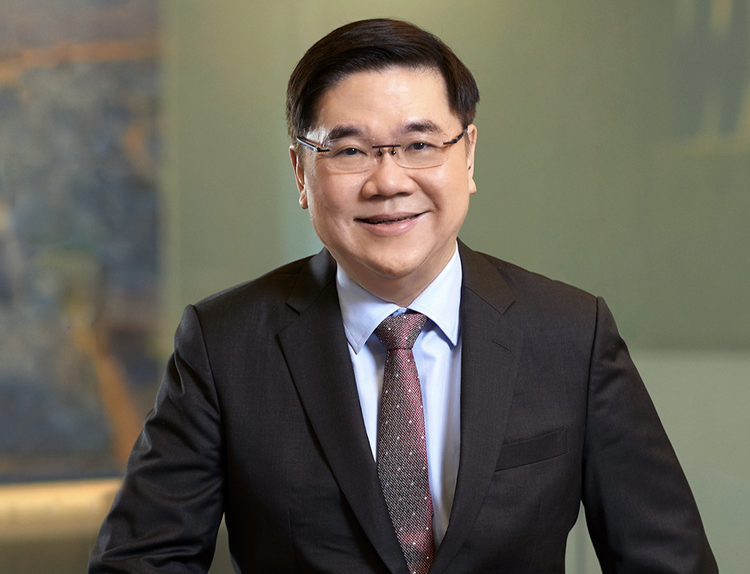
The demand for AI in the Asia Pacific region comes with a strong demand for energy in the region as well. As governments continue to mandate and regulate how energy is used by data centers, Eaton continues to support data centers in the region in ensuring the sustainable use of energy.
According to Jimmy Yam, Vice President & General Manager, Electrical Sector, Southeast Asia at Eaton, the growth of the data center industry in the region is focused primarily in Singapore, Malaysia, Thailand and Indonesia.
“It is good to see data centers emerging in this region. Looking at the capacity needed, Eaton is well placed to support data centers here. We have seen our business grow significantly, especially in Malaysia and Indonesia and it probably applies to every other vendor in this space as well,” he said in an interview with CRN Asia during Tech Week Singapore.
While Eaton has a wide range of services that it offers, its primary focus in Asia is in power management. The vendor currently provides the power infrastructure to data centers in the region. This includes everything from safety to making sure that power is continuously being supplied with minimum outages.
“That’s our business. We also have software to monitor all the various parts of the supply chain to make sure that power is being used efficiently. Apart from that, we are capable of providing some predictive insights on the infrastructure. So, we provided everything end to end when it comes to the power infrastructure,” Yam said.
While sustainability remains a core element when it comes to power, Eaton’s way of dealing with this is to ensure the efficient use of power.
“There's a lot of talk about sustainability and renewable energy. So you see a lot of activities which I think is the right direction. They're going to make sure that we have green energy and renewable energy. In Singapore, for example, we harness power from the sea. We also buy renewable power from Indonesia, from Malaysia. So I think these are all sources of additional power to complement what we have today,” Yam said.
For Yam, what’s crucial about sustainability is making sure that there is green type of energy.
“In Singapore, for example, in the data center, 50% of your power has to be renewable. To me, I think it's not so much about power usage, but more importantly, how you use power. For example, in Taiwan, the biggest power for gas is factories. So, we're providing energy storage whereby they harness power from weather, wind or sea. We store it, and then we use it when it's necessary. And beyond energy storage, it's really making sure that when we do the infrastructure, making sure that we're more efficient in all those usages,” he explained.
The role of partners
While Eaton deals directly when it comes to working with hyperscalers and some customers, Yam pointed out the channel still plays an important role, especially in servicing a lot of the products Eaton offers.
“For example, when we want to do commissioning, we want to do servicing and maintain the equipment we supply. So, we engage our partners in this. But there's no way that we can have so many service folks or even commissioners in the data center to help. So, we do have partners that help us to do that,” he said.
At the same time, Yam believes that as AI goes down into more organizations, there will be a need for partners to install and to develop all these applications.
“The partner play is real. It's really after the infrastructure is up, then the partners will come in to help. It may be in edge computing, application and more,” he added.
Eaton’s 110-year history also means that the company has always maintained a strong focus on its customers.
“I always believe that if I manage my customer, provide a service that the customer likes, and not just able to solve the issue, but the pain point of the customer, I think I'm okay. So, for me, I would rather look at my customer instead of worrying about what the competition is doing. There are worthy competitors who also have their own strengths but for us it's all about the customers,” he said.
Going nuclear
While some countries have started looking at nuclear energy to power the data center industry, Yam believes that the whole myth about nuclear energy, especially in this region, has also changed a fair bit.
“Technology has improved a lot. So even the nuclear reactor has become smaller. And when we talk about clean energy, nuclear energy is very clean, efficient and effective. So I think there's no reason why we cannot use nuclear energy to power data centers,” he said.
Interestingly, Yam believes that the use of nuclear energy to power data centers in Southeast Asia goes down to who actually decides to use it first.
“The question is not if, but it's when. Customers understand nuclear energy, but they tell us they won't be the first one to do it. Nobody will be the first one to do it. So, they wait for others to do it. In the meantime, technology will continue to evolve, continue to improve, and that's where I think the concern about safety will diminish. So, it’s definitely no longer a question of if we’ll use it, but a question of when. And someone will take the lead,” he concluded.