Honeywell Technologies targets ‘automation to autonomy’ shift with AI and channel partners
Honeywell has streamlined its portfolio to become one of the world's largest pure automation companies, says Shashank Luthra, VP/GM ASEAN and East Asia, Building Automation, Honeywell Technologies.
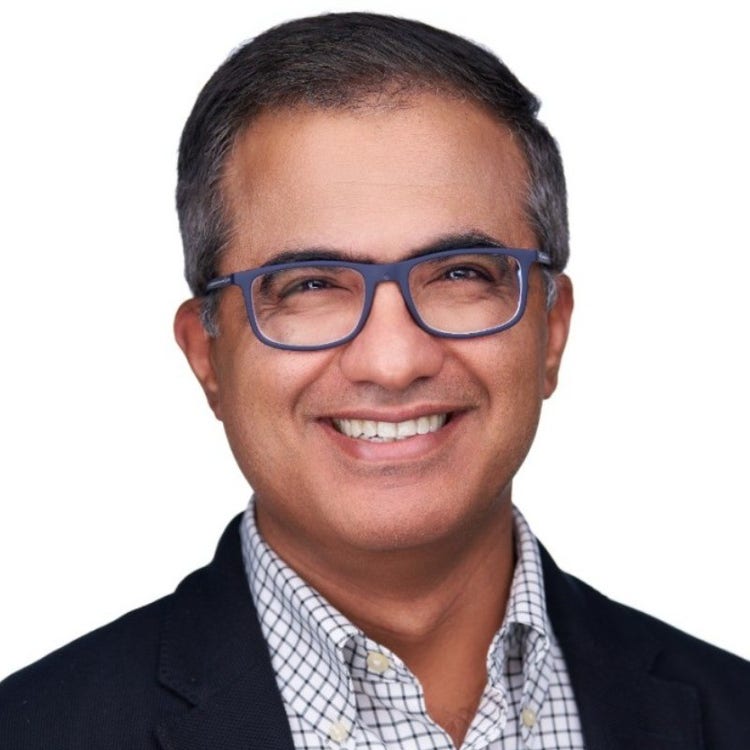
As a global technology and industrial automation company that builds mission-critical systems and software for buildings, manufacturing plants, refineries, and data centers, Honeywell continues to innovate its solutions while also sticking to its core purpose of supporting its customers globally.
In a conversation with CRN Asia, Shashank Luthra, VP/GM ASEAN and East Asia, Building Automation, Honeywell Technologies shared that Honeywell is building AI into its solutions today, with a myriad of use cases available today. For example, in security, Honeywell has use cases that can help implement mission-critical applications.
“We are implementing AI to do all of our service use cases. One of the biggest things that we do with Forge is predictive analytics of buildings. This includes enabling customers to tap into a repository of things that systems have noticed across the globe and get alerts if something goes wrong. Honeywell Forge provides a root cause analysis on the spot.”
“So, those are the kind of applications that we are using for security or for maintenance in buildings. And because all our customers are facing the same challenges, we're using AI to serve up recommendations that are much more customized and helpful,” he said.
Honeywell Forge is a hardware-agnostic enterprise performance management and AI platform that connects physical equipment (OT) with digital systems (IT) to help industrial operations, commercial buildings, and aviation fleets move toward autonomous operations.
At Accelerate 2026, Honeywell Technologies' flagship Building Automation customer event, the company also introduced a portfolio of new intelligent fire and life safety innovations designed to provide earlier insight into potential risks and developing conditions, reduce nuisance alarms and improve incident response.
This includes smarter fire detection through System Sensor Distinguish technology, new carbon monoxide monitoring capabilities and the new Incident Command software application designed to improve decision-making for emergency responders.
Supporting customers in Southeast Asia
In its third quarter results, the company reported sales of US$5.0 billion, up 1% reported and 7% organic driven by broad-based strength across all three segments, pricing actions, and continued demand across key end markets. Honeywell also recently unveiled several new partnerships in Southeast Asia with the technology company looking to support organizations manage their infrastructure and operations efficiently.
In Singapore, Honeywell Technologies announced a collaboration with Keppel Ltd.’s Infrastructure Division to help expand low-carbon fuel production across the Asia-Pacific region. The initiative combines Honeywell Technologies’ process technology expertise with Keppel’s infrastructure development capabilities to advance the development of sustainable aviation fuel (SAF), renewable diesel, methanol-to-jet fuel and biocrude upgrading pathways across the region to help meet growing demand for lower-carbon transportation fuels.
Another partnership in Singapore was with Resorts World Sentosa (RWS) to be the first tourism destination to use AI to predict and manage cooling demand across its district plant. The co-innovation between the Singapore resort and Honeywell will anticipate how much cooling the resort will need before it needs it, cutting energy use while keeping guests comfortable.
Working with partners
According to Luthra, when it comes to working with partners, Honeywell has an interesting global model.
“We have part of our business which is through the channel and we have part of our business through Honeywell Building Solutions, where we are the system integrator. We do the installation of the project as well as the services. For the channel, what we see mostly is the channel differs by product line. So, the partners who are doing fire systems is different from security and so on and so forth,” Luthra said.
He added that Honeywell does have long standing partners which have been supporting Honeywell for over two decades in the region and continue to support them in their growth.
While Honeywell doesn’t work with all distributors, they do have specialized distributors in specific areas. For example, there are engineered systems distributor who are servicing SIs and will do some of the testing and commissioning for the configurations.
“So, there's a level of engineering capability that the distributor has, which is a little more unique to the part of our world,” he added.
Over in Australia and New Zealand, Rhys Crabb, Director, Offering / Product Management, Honeywell Technologies said that the channel growth in that region is strong as well with plenty of opportunity on every domain, be it fire, security, BMS and more.
“That internal competition as well is fueling our innovation at Honeywell to try and continue to push the envelope on our product, on our software, to make our channel partners stronger and more competitive against their competition. So, it's a bit of a win-win in that case,” Crabb said.
“Our partners are fairly country-specific and there are a few that go regional, which is again similar to high-tech. The difference here is we are now starting to see people going across the product lines. So partners that are very strong in the building management system realize that they're selling to the same customer base and maybe they want to also start selling some of our security portfolio,” he added.
Looking ahead, Luthra said that Honeywell has streamlined its portfolio to become one of the world's largest pure automation companies. For Luthra, the endeavour is clearly to go from automation to autonomy, which is taking advantage of the AI developments that are happening to embed info in that direction.
“That doesn't mean that we go away from our roots on the detection and the control in space. We are not going to do big mechanical; we are not going to do big electrical. We are agnostic there, and we will work with whoever is there. But the big innovation, I would say, is moving towards autonomy,” he said.