Thailand going all out on data centers as government approves US$29 billion in projects
Thailand's BOI approved six projects worth 958 billion baht, led by TikTok's 842 billion baht data center infrastructure expansion.
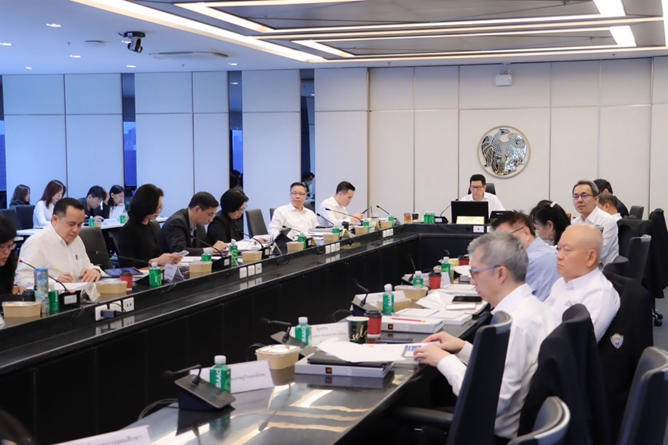
Thailand's Board of Investment has approved six projects with a combined value of 958 billion baht, or about US$29 billion, covering data infrastructure, renewable energy, recycling, and resource-based production.
The country has already witnessed continued investments on data centers from hyperscalers earlier this year. The latest approvals of data centers come as adoption and demand for more AI services in the country.
The approvals were made at a board meeting chaired by Ekniti Nitithanprapas, Deputy Prime Minister and Minister of Finance. The board also reviewed power readiness, clean energy access, and projects selected for Thailand FastPass.
Three approved projects are in data center and data hosting services. Together, they account for 913 billion baht, or about US$27 billion, of the total investment value.
The largest approval went to TikTok System (Thailand) Co., Ltd., a local unit of TikTok, which is owned by China's ByteDance. The company plans to invest 842 billion baht, or about US$25 billion.
TikTok had previously said it would invest US$8.8 billion in data centers over five years. The project covers additional servers, data storage capacity, and processing infrastructure in Bangkok, Samut Prakan, and Chachoengsao.
The company has also committed to developing digital literacy and e-commerce curricula aimed at Thai entrepreneurs and workforce development.
Thailand's position in Southeast Asia
Thailand's approvals come as data center investment continues to spread across Southeast Asia. Singapore remains the region's established data center hub, while Malaysia has become one of the region's more active growth markets.
Thailand is still smaller as a data center market, but CBRE said it is working to improve access to power and land for new projects, supported by recent subsea cable infrastructure investment.
Krungsri Research said investment has been moving from Singapore into Malaysia, Indonesia, Vietnam, and Thailand, as operators weigh land, power, connectivity, and policy support.
Skyline Data Center and Cloud Services Co., Ltd. received approval for a 46 billion baht data center project in Chachoengsao. The facility is planned to support an IT load of 200 megawatts.
Bridge Data Centres IIO (Thailand) Co., Ltd., from Singapore, received approval for a 24.6 billion baht project in Chonburi. The planned data center will support an IT load of 134 megawatts.
The other approved projects are outside the data infrastructure. PureCycle (Thailand) Co., Ltd. will invest 8.18 billion baht in recycled plastic pellet production in Rayong, using technology licensed from P&G.
Dan Khun Thot Wind One Co., Ltd. received approval for a 4.7 billion baht wind power project in Nakhon Ratchasima, with a capacity of 89 megawatts.
ASEAN Potash Chaiyaphum Plc. will invest 31.4 billion baht in potassium chloride production in Chaiyaphum. Potassium chloride is used in fertilizer production.
The BOI board also selected nine additional projects for Thailand FastPass, worth 52 billion baht, or about US$1.6 billion. The portfolio now covers 25 projects worth 223 billion baht.
Thailand FastPass is designed to coordinate approvals and permitting across agencies involved in strategic investment projects.
Power and clean energy remain in focus
Electricity supply was discussed with the Ministry of Energy and the Energy Regulatory Commission, with a focus on urgent power needs linked to incoming investment in the Eastern region.
The board called for faster issuance of Thailand's Power Development Plan, which is expected to guide long-term power-system planning, future demand, and new energy technologies.
The board discussed Direct Renewable Power Purchase Agreements, which would allow private companies to buy and sell renewable electricity directly. It also acknowledged Utility Green Tariff 2, a source-specific tariff intended to give companies more options for procuring clean electricity.
The BOI was asked to coordinate with agencies on clean energy rules, including licensing conditions for foreign operators installing solar rooftops and self-generation under Independent Power Supply arrangements.