Cisco360 still a work-in-progress, says Cisco’s channel chief
"We’re not where we want to be yet, but we’re making tangible, material progress almost every single day," says Tim Coogan, Cisco’s Senior Vice President, Global Partner Sales
Cisco has announced additional updates to its partner program, such as advisor and developer partner value indexes (PVI), and a new unified distributor PVI that will be available by February 2027. The PVIs are a way to empower partners of all sizes and types and measure their contributions based on the unique value their role brings to customers.
Just under a year into Cisco360, the vendor is still tweaking the program to help partners of all sizes adapt to the changes and find ways to maximize their potential gains.
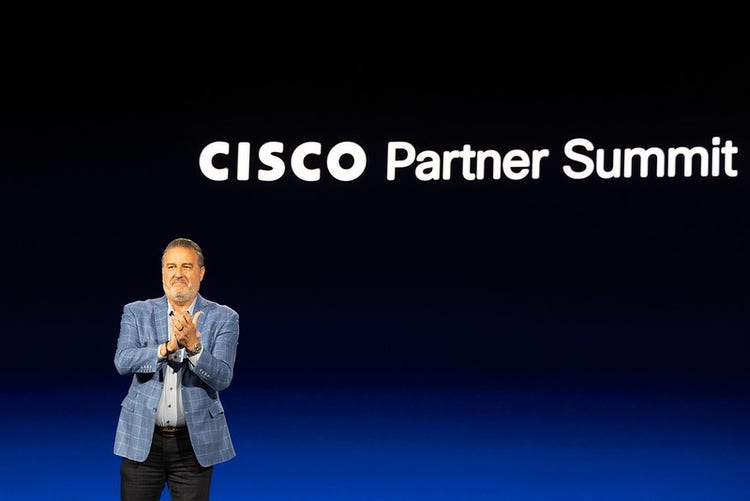
Speaking at this year’s partner summit in Vancouver, Canada, Tim Coogan, Cisco’s Senior Vice President, Global Partner Sales acknowledged that large and small-and-mid-sized partners face different challenges during the transition. He shared that Cisco is working on striking a balance between rewarding investment and capability.
[Read more: Cisco sees growing APJC partner pipeline for Cisco 360’s highest tier]
“You strive for a program to be loved by all or hated by all,” Coogan said during a press and analyst conference. “Now you don't want anything to be hated by anybody but you want it to be equal in its ability to deliver value.
“I think one of the things that we enjoyed is that we did get feedback from partners both large and small, in various geographies, of things they did and didn't want, or things that they wanted us to change.”
“And I think that was important because the goal of 360 was many things, but it was to reward investment and to align incentive to capability, and that shouldn't necessarily be based solely on size.”
Using an example from his days as a sales leader in Cisco, he illustrated how the new 360 program is meant to better help partners work their strengths.
“In my previous role […] if a partner was a gold partner, there was a lazy assumption that could be made that the partner was great at everything — and that may or may not have been true,” he said. “It may have been based more on that partner’s ability to deliver on volume.
“The idea behind 360 is to align a partner who wants to sell broadly across the portfolio with PVI scores that reflect that investment, but also to nurture a partner who may be very, very specific to a particular piece of the business.
“Maybe they want to be specialized partners in a particular environment, but found it difficult to compete with a larger partner based on price. This gives that partner that's bespoke [and] focused on a particular technology to compete based on capability, not just on price.”
However, he understands that larger partners have a “slightly higher propensity” to invest in the requirements of a PVI score in the form of black belts and trainings, which is why Cisco has been investing so heavily to transform its distribution ecosystem with things like the upcoming distributor PVI.
“Distributors are fundamental to supporting those partners that might not have direct coverage from Cisco or might need it in a slightly different way,” he said.
Coogan added that the vendor will continue to work closely with partners to find out what works best for the ecosystem and strike the right balance to support partners of all types.
“I'd like us to always be running towards what feels like a better version of the current model,” he said. “We’re not where we want to be yet, but we’re making tangible, material progress almost every single day.”
Nurhuda Syed is reporting from Cisco Partner Summit in Vancouver.