Logicalis APAC CEO: Cisco 360 enhances overall partner profitability
“That was probably the big worry that all partners had [with 360], that we would end up doing worse than before. For us, the answer is no,” said Chong Win Lee, CEO of Logicalis Asia Pacific.
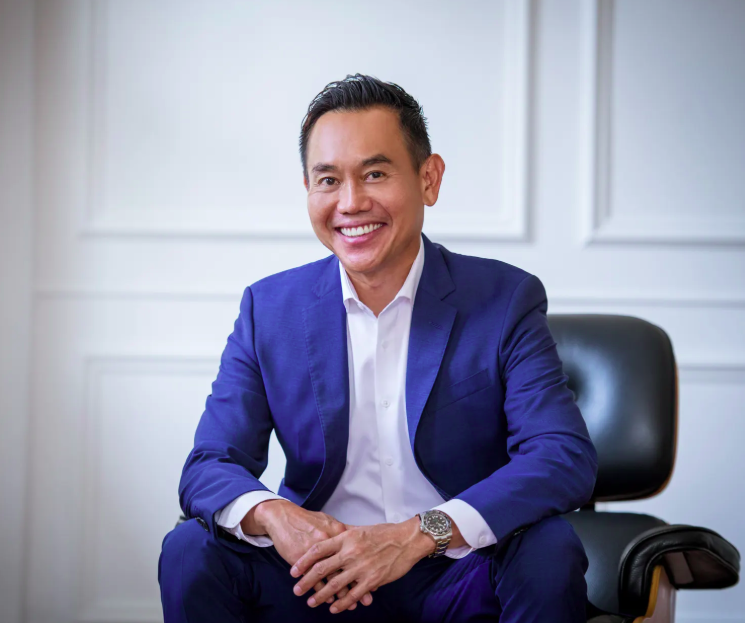
Thus far, the Cisco 360 program has enabled partners like Logicalis to enhance their overall profitability, while also pushing them to deliver even better service to customers due to the Preferred Partner status for specific architectures.
“The proof of the pudding for us is whether or not it’s been more profitable,” Chong Win Lee, CEO of Logicalis Asia Pacific told CRN Asia. “If I look at how we’ve fared, we’re not less profitable. That was probably the big worry that all partners had [with 360], that we would end up doing worse than before. For us, the answer is no.”
In addition to the 360 program changes, Logicalis was also able to augment their overall partner profitability through assessments, shared Lee. These tied in very well with the specific categories or architectures that Logicalis have worked on to attain the premium status.
“Because we’re a Preferred Partner in security, we could gain the customers’ confidence to conduct security assessments for them,” he said. “Then there’s a Cisco incentive to do that.
“The best part of it is post-assessment, it opens up more opportunities with the customers, because it leads us to have a conversation around the gaps in their current security posture, for example, and how we could help remediate those gaps.”
Logicalis has attained Preferred Partner status in several categories, including security and networking. They are currently working on achieving one for Splunk as well as CX specialization. Lee said that Logicalis works on the specializations as a global organization, and is aiming to achieve the coveted status for as many key architectures as possible, with its APAC teams being “there already”.
“A big focus that Cisco has for this year is secure networking certification and we’re very proud to say that we’re one of the first partners to attain that,” he said.
Prioritizing the specialization makes sense, as they operate a regional network of Security Operations Centres (SOCs), with the first wave of certs attained in China and Indonesia.
The next wave will involve the teams in Singapore, Hong Kong, Taiwan, and Malaysia. The focused investment is also due to growing demand in APAC for an integrated solution.
“The conversations that we’re having with customers are pretty much around it,” he said. “Especially with the worry right now and awareness of frontier AI-related cybersecurity risks. Having the secure networking conversation with customers is very pertinent.”
Growing their share of the mid-market
They also achieved Cisco’s APJC commercial partner award for 2026, as they performed “particularly strong” in the mid-market and SMB segment for FY26.
“Mid-market customers are as sophisticated as the large enterprise customers relating to conversations [around] infrastructure, AI deployment, applications adoption, and cybersecurity,” said Lee.
“The only difference is that in each country, maybe the scale of what they are doing, and the size of the operations may not be the same as a large enterprise — but the sophistication of what they are doing is actually not any less.”
Logicalis’ experience, capabilities, and presence across APAC as well as globally has served them well in helping them maintain relationships with such customers.
“Many of these mid-market customers are looking for a partner that is able to help them across the region [with] better consistency,” he said.
“The reason why I feel that we’ve got a stronger proposition right now is as customers look at AI infrastructure, what comes to mind might be compute GPUs, networking, and storage — but it’s beyond that. It’s whether or not you’re able to deploy all of that in a highly secure and highly integrated manner.
“I think we’ve got a very comprehensive line of solutions for AI infrastructure and all the different categories of demand. The execution part will ultimately determine whether or not we're successful, and that’s what we all need to work together on.”