“The work is shifting from tactical, low-margin to strategic, higher-margin services,” said Workato’s Global VP of Partner GTM and Alliances
The company is strengthening its Asia-Pacific partner strategy with India as a standalone focus, looking beyond large GSIs to regional SIs and MSPs serving SMEs, while identifying new opportunities in GSI-run GCCs.
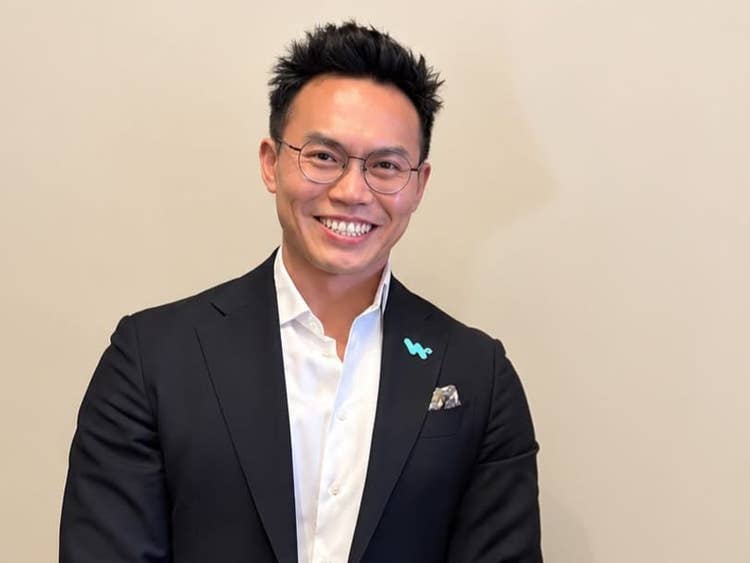
Workato sees artificial intelligence changing the nature of services that channel partners deliver, shifting their work from implementation and development towards advisory, design, process re-engineering and managed services. The company is also looking to broaden its partner ecosystem in India, with a greater focus on regional systems integrators (SIs), managed service providers (MSPs) and businesses serving small and medium enterprises.
Speaking to CRN India, Workato Global VP, Partner GTM & Alliances, David Ng, said AI-powered tools are accelerating software development and migration, but that does not reduce the need for partners. Instead, it changes where they can deliver value and generate revenue.
“The work shifts from tactical, low-margin work to really strategic, higher-margin work like design services, like advisory services, like change management,” Ng said.
He adds that deployed solutions continue to require ongoing support, creating another opportunity for partners. With AI and the way the Workato platform is designed, he believes partners can also increase their margins on support services.
Workato is strengthening its Asia-Pacific partner go-to-market organisation, with India emerging as a standalone focus area within its regional strategy.
Ng said the company is looking at three areas in India. It includes small and medium enterprises, global systems integrators (GSIs) operating in the country, and India-based large enterprises.
The company has seen strong growth through its GSI relationships. Ng said global partner-sourced revenue grew 110 percent year-on-year when comparing the first three quarters of the current year with the same period last year. Revenue from the GSI segment grew 380 percent over the same period.
These are global figures, he clarifies, with the GSI contribution including India-based companies whose go-to-market operations extend across international markets.
However, Workato does not want its partner opportunity to remain concentrated among large global integrators. It is also looking at regional SIs, boutique specialist partners and AI-native consulting firms.
The company has recently appointed Alex Lim to lead its Asia-Pacific partner go-to-market efforts and onboarded two senior channel executives in Singapore. Ng said he has visited India three times this year as Workato strengthens its regional partner strategy.
For the Indian market, the company wants to identify MSPs serving MSMEs and understand the products and services they are developing.
“We want to identify the fleet of managed service providers that are solving for the MSMEs. What are they building? What products are they building? And how can Workato embed what they are building?” Ng said.
He sees an opportunity for technology partners as well, particularly as organisations adopt multiple AI providers. Workato's role as an AI control and execution plane, he said, can help manage different platforms, including ChatGPT, Claude and sovereign AI providers.
AI changes the economics of partner services
Workato's partnership with Tata Consultancy Services (TCS) on legacy migration illustrates how it expects AI to change partner delivery.
Ng said the joint solution was developed through customer projects rather than as a standalone go-to-market initiative. Workato's AIRO tool accelerates the development of workloads on the Workato platform, while TCS's AI tool helps understand the existing legacy environment and identify what needs to be migrated.
The two tools address different parts of the migration process. TCS helps accelerate the development of requirements from the legacy platform, while AIRO speeds up the build of those workloads on Workato.
Ng said the approach has been used across customer migrations, after which the solution was productised and taken to scale.
For partners, he argues, faster development does not mean that customers no longer need their expertise. GSIs bring industry and domain knowledge, along with best practices across business functions and sectors.
Partners still need to ensure that solutions follow the right security and architectural frameworks. They also have a role in process re-engineering, which becomes important as AI changes how employees interact with information and business systems.
Ng sees this creating opportunities in two areas. The first is bottom-up modernisation, where customers migrate from legacy platforms to modern environments. The second is top-down AI transformation, involving process engineering and the development and deployment of AI.
Once customers complete modernisation, partners can pursue the wider AI transformation opportunities across those organisations.
GCCs can be both customers and partners
Workato also sees India's global capability centre (GCC) ecosystem creating opportunities for its partners. Ng describes GCCs as both customers and partners, depending on how they engage with the platform.
Some GCCs operate through service providers such as Cognizant or Tech Mahindra. In these arrangements, a service provider may procure Workato not for its own internal operations, but to deliver a managed solution to the GCC it operates for an enterprise customer.
Although the billing may go to the service provider, Ng said the nature of the engagement is a partnership rather than a conventional resale.
GCCs can also become direct Workato customers, including those with substantial AI engineering capabilities. Ng argues that building AI engineering capabilities in-house does not remove the need for orchestration and governance.
He points to a partner that is building an entire software development lifecycle on Workato, using a swarm of agents to manage the process.
For Workato, this creates another opportunity to work with AI engineering firms and service providers as they develop and manage increasingly complex AI environments.